THE END OF SILENCE: BRITAIN’S UNYIELDING RECKONING WITH IDENTITY AND INTEGRATION

LONDON — For decades, a quiet consensus governed British public life, a set of unwritten rules that discouraged open discussion about the nation’s rapid demographic shifts. Citizens were often instructed to remain silent about the strain on public services and the profound cultural challenges emerging within their changing communities.
Today, that era of enforced silence is coming to a definitive end. A profound awakening is sweeping across the United Kingdom, as ordinary people find their voices. No longer intimidated by accusations of bigotry, Britons are engaging in a candid conversation about the future of their country and values.
The Labour government’s recent attempt to codify a formal definition of “anti-Muslim hostility” served as a critical flashpoint for this tension. While framed as a shield against discrimination, the proposal faced immediate, broad-based opposition from secular groups and conservatives who viewed it as a backdoor restriction on free speech.
Critics argued that such special protections for one religion could undermine the fundamental principle of equality before the law. Even the Muslim Council of Britain expressed dissatisfaction, albeit for different reasons, highlighting the deep unease and the perceived double standards that now permeate the nation’s sensitive public discourse.
This pushback is rooted in the collective memory of painful national scandals that left lasting scars on public trust. In towns like Rotherham, Rochdale, and Oldham, investigations revealed the systematic exploitation of vulnerable young girls. These crimes were predominantly carried out by organized groups of British-Pakistani Muslim men.
Estimates suggest the number of victims reached into the tens of thousands over several decades. Yet, for years, the authorities—including police and social services—hesitated to act decisively. They were often paralyzed by the fear of being labeled racist or damaging fragile “community relations” in those specific areas.
The priority placed on avoiding offense over the protection of children has created a profound crisis of institutional legitimacy. A new inquiry chaired by Baroness Longfield in 2026 has already seen victims withdraw. They sense another exercise in bureaucratic obfuscation and a refusal to confront uncomfortable cultural dimensions.
This public frustration has translated into a dramatic political realignment across the British landscape. Reform UK, led by the populist Nigel Farage, has surged in the polls and secured hundreds of local council seats. Their supporters point to Farage’s willingness to address issues that the mainstream parties avoid.
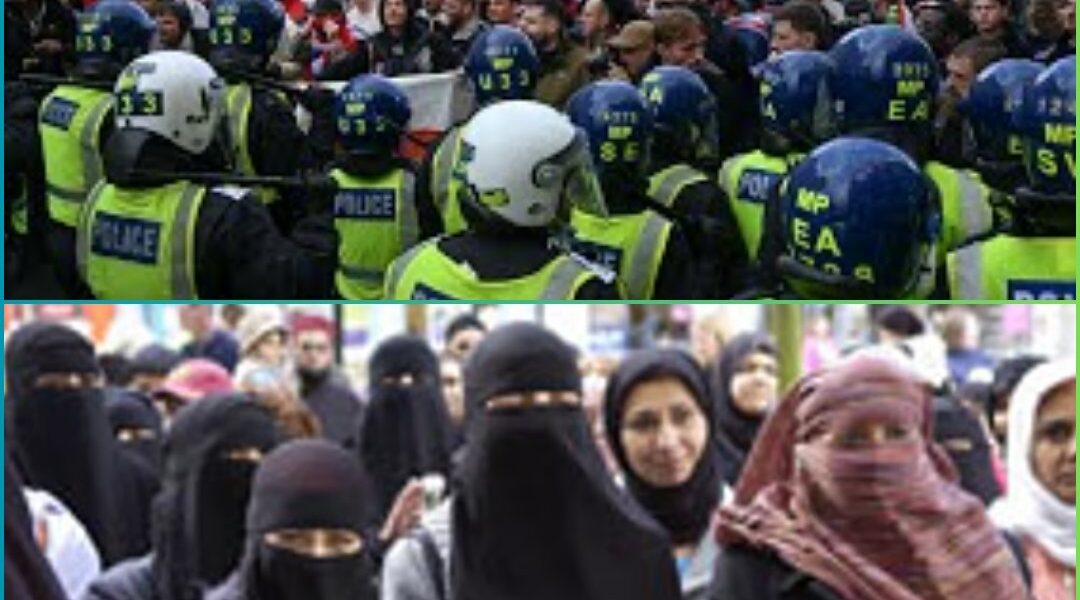
One such issue is the optic of assertive religious displays in historic public spaces, such as large-scale prayer gatherings in Trafalgar Square. While critics accuse Farage of provocation, many ordinary Britons see his commentary as a necessary recognition of visible changes that have occurred without any public mandate.
Voters are explaining their choices in starkly practical terms: housing shortages, NHS waiting lists, and school pressures. In many communities, there is a growing sense of becoming strangers in familiar places. These are not abstract ideological battles; they are the lived daily experiences of a nation in transition.
The grooming scandals remain a particularly raw nerve in the national psyche. For years, the specific ethnic and religious patterns were downplayed in official reports. Terms like “Asian grooming gangs” were used to obscure specific realities, shielding the institutions from confronting the cultural factors that allowed crimes to persist.
Political correctness, combined with the fear of “Islamophobia” accusations, created a environment where criminals could operate with relative impunity. Public memory of these institutional failures fuels current skepticism toward any new speech guidelines. There is a demand for straight talk and evidence-based policy rather than managed euphemisms.
Broader surveys reveal a complex and worrying picture of integration within the UK today. A 2026 census indicated that only around half of British Muslims feel they strongly belong in the country. This figure represents a significant decline, raising urgent questions about the success of the multiculturalism model.
Some attribute this decline to rising hostility from the wider public. Others suggest deeper challenges, including differing attitudes toward secular values, gender roles, and the rights of non-Muslims. Britain has accommodated halal options and prayer facilities extensively, yet the question of reciprocity remains a central, unresolved tension.
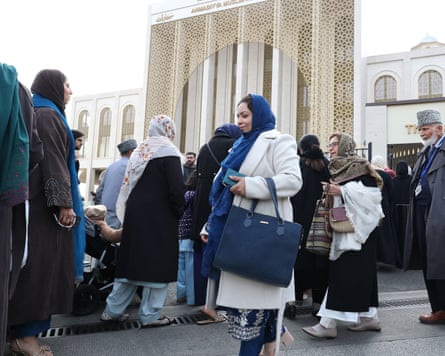
Public displays of faith illustrate this friction. Large prayer gatherings in central London raise questions about the use of public space and the visibility of integration. Christian or other religious events rarely provoke equivalent debate, highlighting what many perceive as a one-sided expectation of tolerance and cultural adaptation.
In many Muslim-majority countries, non-Islamic public religious expressions face severe restrictions or outright bans. Britain, by contrast, permits open practice while expecting respect for its liberal framework. When this balance appears tilted or unreciprocal, resentment builds among the majority population who feel their norms are overlooked.
Media coverage often amplifies this perceived divide. Criticism of Islam frequently draws much stronger condemnation than similar scrutiny applied to other faiths. Universities have even disinvited speakers who question aspects of Islamic doctrine, leading to claims that certain topics are being placed beyond the reach of rational inquiry.
Meanwhile, independent voices and alternative platforms have filled the information gap. This decentralization of news has weakened traditional gatekeepers and accelerated the shift in the public mood. Conversations that were previously sidelined in the mainstream are now being held openly by millions of people online daily.
The British experience mirrors parallel trends across Europe. Parties emphasizing border control and national identity have gained significant ground in the Netherlands, Italy, France, and Sweden. Voters across the continent cite safety concerns and cultural cohesion as their primary reasons for rejecting the status quo of mass migration.
At its core, the issue remains one of free expression and the rule of law. Britain has a long history of open debate and the right to criticize ideas. Attempts to criminalize the scrutiny of religious doctrines through vague definitions of “hostility” risk undermining the very foundation of a free society.
Distinguishing between protecting individuals from violence and shielding ideas from examination is a difficult task. Facts about crime patterns and integration statistics should remain discussable without the automatic attachment of social stigma. Realism, not hatred, is what most citizens are currently demanding from their political leaders.
Reform’s rise reflects a demand for candid discussion about the compatibility of certain imported practices with British values. Issues such as cousin marriage prevalence, attitudes toward apostasy, and gender segregation create real friction. Pointing this out is an observation grounded in evidence, not an act of blind prejudice.
The silencing strategy that relied on social penalties and institutional caution is losing its power. People are comparing official narratives with the reality of their own streets and schools. When the testimonies of grooming victims clash with sanitized government reports, trust in the establishment evaporates almost instantly.
Economic priorities also play a role in this awakening. When daily hotel costs for illegal arrivals exceed the support provided to struggling British pensioners, the public perceives a misalignment of priorities. They seek a government that places the needs and security of existing citizens at the forefront of policy.
Britain now faces a fundamental choice. It can persist with policies that prioritize accommodation over cohesion, risking further societal fragmentation. Or it can insist on genuine integration, the equal application of the law, and an open, honest discussion of the challenges posed by large-scale migration from distant regions.
The latter path requires the courage to examine uncomfortable patterns without descending into collective blame. Most citizens seek neither hatred nor surrender. They want practical realism: controlled borders, cultural self-confidence, and the preservation of the core liberal values that have defined British life for centuries.
The current moment represents a major turning point in the nation’s history. Protests, polling shifts, and candid conversations indicate that the public will no longer accept managed decline. Britain retains great strength in its institutions and its history of liberty, but harnessing that strength requires an honest reckoning.
The British people have shown resilience when facing existential questions about their sovereignty. The present challenge demands the same spirit of clear-eyed assessment. Free speech and equal protection under the law are not negotiable luxuries; they are the bedrock upon which a cohesive and diverse society must be built.
Integration succeeds only when expectations are clear, transparent, and reciprocal. Britain can remain a welcoming country while firmly affirming its right to define the terms of belonging. This balance, long assumed but recently neglected, now requires a deliberate and courageous renewal by leaders and citizens alike.
The awakening underway suggests that many are ready to participate in this renewal. They seek a future based on an honest recognition of reality and a shared commitment to the country’s survival. By breaking the silence, Britain is finally beginning to address the vital questions it has ignored for far too long.