The Prime Minister has landed in the UAE, but is he already too late? 😱 Facing a “diplomatic vacuum,” Keir Starmer is being slammed for “abandoning” UK allies while Iran holds the global economy for ransom!

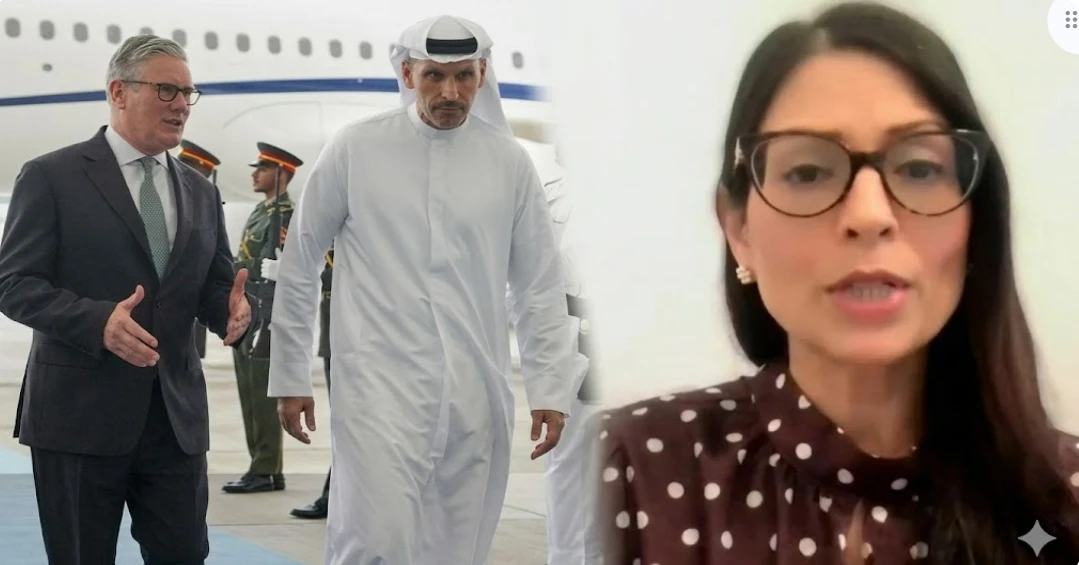
UK Prime Minister Keir Starmer is facing intense backlash from the opposition after arriving in the United Arab Emirates as part of a diplomatic effort to sustain a fragile ceasefire in the Middle East. Senior figures from the Conservative Party have dismissed the visit as “an afterthought,” accusing the Prime Minister of being largely absent during the early stages of the crisis.
Controversy Over UAE Visit and a “Diplomatic Vacuum”
Speaking on GB News, Shadow Foreign Secretary Priti Patel launched a sharp attack on Starmer. While acknowledging the importance of engaging with allies, she argued that his visit came far too late—approximately six to eight weeks after the conflict had already escalated.
“He has hesitated in every international situation since becoming Prime Minister,” Patel claimed. She added that key UK allies in the Gulf—including the UAE, Qatar, and Bahrain, all of which host British bases and personnel—felt “abandoned” due to London’s lack of decisive early action to protect citizens and partners.
Commentators have also mocked Starmer’s diplomatic efforts as being “a day late and a dollar short.”
Strait of Hormuz Tensions and the Lebanon Question
At the heart of the crisis lies rising tension in the Strait of Hormuz. Reports suggest that Iran has imposed fees of up to $2 million per oil tanker passing through the strategic waterway.
The UK Foreign Secretary has called for free and open passage without charges, a position Patel described as “self-evident,” given that the strait is governed by international maritime law. She warned that such fees could have “massive consequences” for the global economy, while criticizing the government for relying on statements rather than taking concrete action.
On whether a ceasefire with Iran should include Lebanon—a proposal supported by Iran and Pakistan but rejected by Israel and the United States—Patel firmly backed Israel’s right to self-defense. She argued that the core issue lies with Hezbollah, which is backed by Iran, and insisted that the real solution is its disarmament in line with United Nations resolutions.
Growing Debate Over UK Defence Capabilities
The interview also reignited a fierce debate over the state of the UK’s military. Patel criticized Starmer for missing a major defence conference in London where key investment plans were to be announced, and called for defence spending to be increased to 3% of GDP.
However, commentators pointed out that the Conservative Party itself had, over 14 years in power, significantly “hollowed out” the armed forces. Figures cited include the loss of 23 regiments, a 27% reduction in personnel, and the army shrinking to its smallest size in centuries. Some naval assets, such as HMS Dragon, reportedly operate under limited schedules due to maintenance contract changes.
In response, Conservatives argued that resources had been redirected toward modern capabilities such as cyber warfare and advanced technologies to counter threats from countries like Russia, China, and Iran. Nevertheless, they acknowledged that current realities demand increased funding and a larger, more deployable force on the ground.