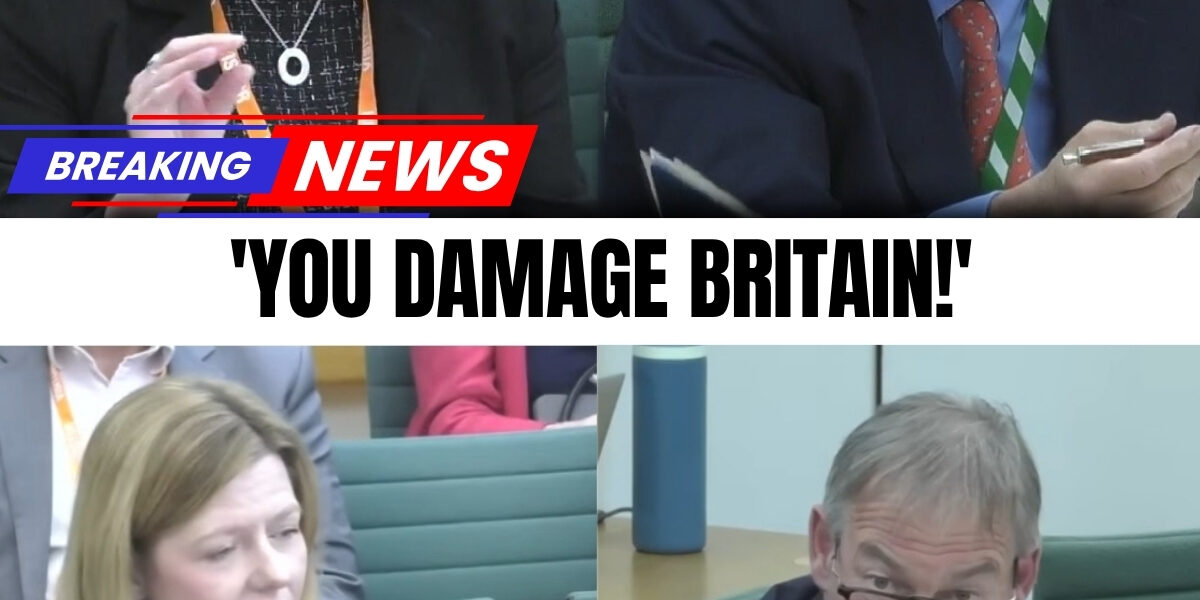
Westminster has just witnessed an absolute bloodbath! 😱 Reform UK MP Rupert Lowe launched a savage, career-ending attack on senior tax officials, exposing the UK’s horrifying 22,000-page tax code as a catastrophic weapon that is actively destroying British enterprise!


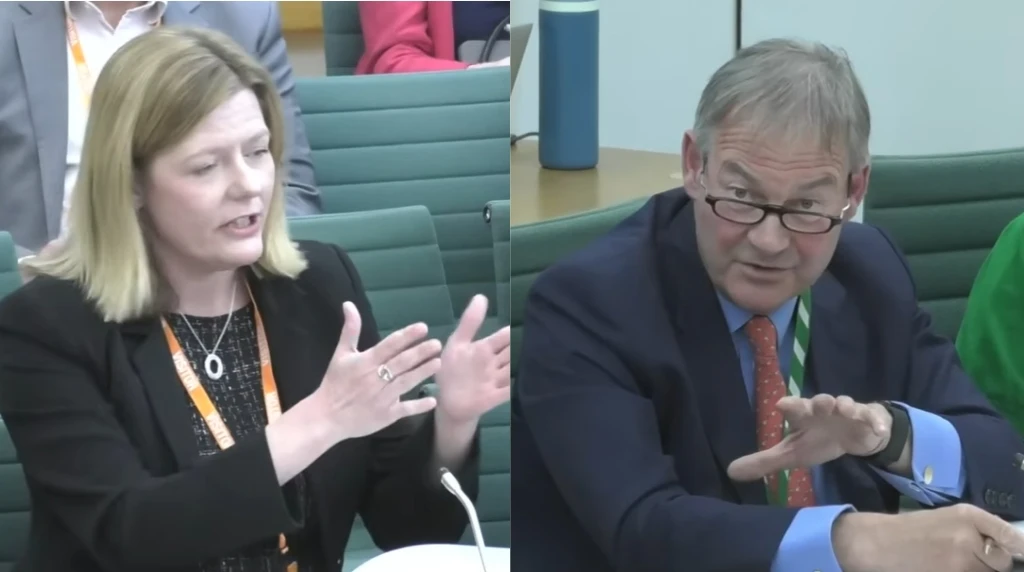
The complexity of the United Kingdom’s tax system came under blistering attack today during a parliamentary committee hearing, as Reform UK MP Rupert Lowe fiercely confronted senior officials from HM Revenue and Customs (HMRC).
Lowe accused the tax authority of actively “damaging British enterprise” through an overwhelmingly convoluted 22,000-page tax code, claiming that the rules are so complex that even HMRC’s own staff frequently fail to understand them. The clash highlights a growing political push for radical deregulation and exposes the deep frustrations of the business sector regarding bureaucratic overreach.
The Confrontation: A “Wretched Homunculus of a Book”
The exchange erupted when Lowe, utilizing his background in the private sector, directly challenged the competence and efficiency of HMRC’s administrative framework.
“In my experience of dealing with HMRC, you don’t know your own rulebook. Your staff turnover is massive, and very often your staff don’t understand the rulebook either,” Lowe asserted, setting a highly combative tone.
He then cited staggering statistics to emphasize the bureaucratic burden placed on taxpayers and businesses: a UK tax code spanning 22,000 pages across two volumes, supplemented by 200 tax manuals totaling 80,000 pages. Lowe dismissed the labyrinthine system as a “wretched homunculus of a book” that operates against the interests of honest citizens.
“Most people want to pay their tax, they want to be honest… but your rulebook is so complicated that half the time they try and do the right thing, but you might take a different view,” Lowe argued. He suggested that this lack of clarity effectively functions as a trap, allowing HMRC to unfairly penalize well-meaning taxpayers.
To underscore the absurdity of the UK’s system, Lowe drew a stark international comparison, pointing out that Hong Kong manages its economy with a tax code of merely 500 pages.
HMRC’s Defense: Economic Evolution and Parliamentary Will
The HMRC officials present, including an official addressed as Jonathan, pushed back against Lowe’s characterization, arguing that the volume of the tax code is a necessary reflection of a modern, rapidly evolving global economy and the direct mandates of Parliament itself.
When Lowe criticized HMRC’s lack of clarity regarding remote working rules, the officials attempted to explain that laws drafted years ago have struggled to keep pace with modern working practices.
Jonathan further defended the agency by pointing to emerging financial sectors that require entirely new regulatory frameworks. “The tax code needs to now adapt to crypto assets. Crypto assets did not exist a few years ago,” he explained.
Crucially, the HMRC representatives deflected the blame back onto the legislature. They noted that the tax code expands because successive governments continuously introduce new policies. “If new legislation comes forward, new taxes come forward… we have two new taxes being developed at the moment: vaping duty… and the Carbon Border Adjustment Mechanism. They will require legislation and guidance,” Jonathan stated, emphasizing that HMRC merely executes “the will of Parliament.”
Despite conceding that they “will always look for simplicity,” the civil servants maintained that “shortness does not always imply clarity.”
Political and Economic Implications
This heated committee exchange serves as a potent microcosm of the broader political battle currently raging in Westminster. For Reform UK, attacking the bloated administrative state is a core populist strategy. By highlighting a 22,000-page tax code, Lowe effectively positions himself as the defender of everyday entrepreneurs suffocating under government red tape.
The debate also touches upon a critical vulnerability in the UK’s economic strategy. As the country struggles with low growth and lagging productivity, business leaders consistently cite regulatory complexity as a primary deterrent to investment and expansion. While left-leaning politicians often focus on closing tax loopholes and prosecuting evasion, Lowe’s intervention sharply pivots the narrative toward radical simplification.
The confrontation underscores a severe disconnect between the lawmakers who draft complex fiscal policies, the civil servants tasked with enforcing them, and the businesses forced to navigate them. Until a consensus is reached on overhauling the system, the UK tax code remains a sprawling battleground of political ideology and economic friction.