Exploring daily skincare habits: How some people use baking soda in simple home routines for smoother-looking skin. HYN

Many people notice changes in their skin as they age, with a less even texture and some areas appearing duller or with more noticeable lines due to daily life. These common experiences can affect your self-confidence when you look in the mirror every morning. What if a simple, common pantry ingredient like baking soda could play a small role in your evening relaxation routine? In this guide, we’ll show you a popular method for making and using a simple baking soda mixture as part of your evening skincare routine. You might be surprised by how simple it is.

Why is baking soda so often mentioned in skin care conversations?
Baking soda is a mildly abrasive powder with pH-balancing properties, found in most kitchens. Some skincare enthusiasts add it to simple pastes or creams for its ability to help remove dead surface cells. Research and anecdotal evidence suggest it can provide gentle exfoliation, leaving skin temporarily smoother.
However, dermatologists emphasize that results vary greatly depending on skin type. What works as a light scrub for one person may be too harsh for sensitive or dry skin. This is why it’s crucial to understand how to use it correctly.
Understanding how baking soda interacts with your skin
The skin’s natural barrier prefers a slightly acidic environment. Baking soda is alkaline, so it can temporarily adjust the surface pH. When used sparingly and diluted, some people report a fresher complexion. However, excessive use can cause dryness or irritation in others.
Here’s what numerous sources report about potential surface-level effects:
- Gentle exfoliation of dead skin cells
- Temporary softening of rough texture in areas such as elbows or heels.
- A feeling of freshness after a delicate cleansing.
Always listen to your skin and discontinue use if redness appears.
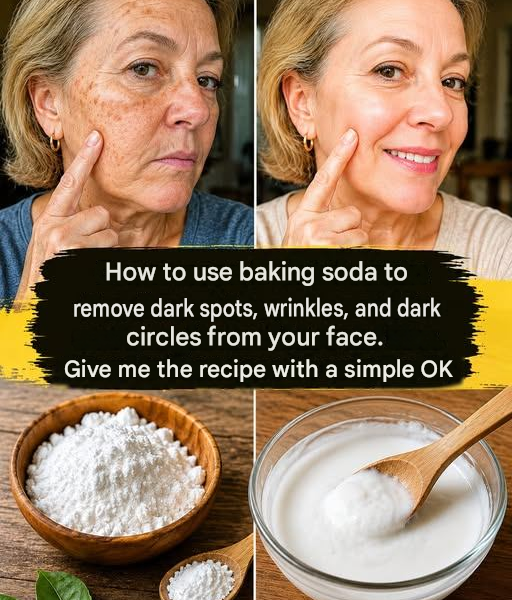
A simple recipe for a baking soda cream, ideal for the evening.
This basic blend is highly appreciated by those looking for natural skincare options. It’s quick to make and uses common household ingredients.
Ingredients (for a single application):
- 1 teaspoon baking soda
- 1-2 tablespoons of plain yogurt or coconut oil (for a creamy consistency and more hydration)
- Add a few drops of water to adjust the consistency, if necessary.
- Optional: a pinch of turmeric or a drop of honey for those who like to experiment with gentle additions (test on a small area of skin first).
Step-by-step preparation:
- In a small, clean bowl, mix the baking soda with your chosen base (yogurt is perfect for a creamy, delicate consistency).
- Mix gently until you obtain a smooth, spreadable paste. If the paste is too thick, add water drop by drop.
- Make sure your face is perfectly cleansed and dry before applying.
Apply a thin layer to the face or targeted areas before bedtime, avoiding the delicate eye zone. Leave it on for 10-15 minutes or overnight if your skin tolerates it well, then rinse gently in the morning.
But that’s not the only way to incorporate it. Some prefer a quicker scrub version by mixing baking soda with water alone for short massage sessions.
Consistency matters more than intensity. Here are practical tips many find helpful:
- Start with once or twice a week to see how your skin responds.
- Always do a patch test on your inner arm 24 hours before facial use.
- Follow up with a good moisturizer to support the skin barrier.
- Use lukewarm water when rinsing—hot water can strip natural oils.
- Store any leftover mixture in the fridge for up to 2 days.
Comparison of Common Baking Soda Mixtures:
| Mixture Type | Best For | Frequency Suggestion | Key Benefit Felt |
|---|---|---|---|
| Baking Soda + Yogurt | Dry or normal skin | 1-2 times weekly | Soothing cream texture |
| Baking Soda + Water | Quick exfoliation | Once weekly | Light surface refresh |
| Baking Soda + Oil | Very dry patches | Spot treatment | Added nourishment |
What Science Suggests About Surface Exfoliation
Some studies explore baking soda’s role in gentle cleansing and odor control, while everyday users often share experiences of brighter-looking skin after regular mild use. Experts remind us that deeper concerns like wrinkles or pigmentation involve multiple factors including sun protection, genetics, and lifestyle. Surface exfoliation may contribute to a more polished appearance temporarily.
This is where the real value lies: building small, sustainable habits that make you feel good about your routine.
For better overall results, consider these complementary steps:
- Drink plenty of water throughout the day.
- Get consistent sleep—your skin repairs itself overnight.
- Apply broad-spectrum sunscreen daily, even indoors.
- Eat a balanced diet rich in fruits, vegetables, and healthy fats.
These everyday choices often make the biggest difference in how skin looks and feels over time.
Common Questions About Baking Soda Skincare
How long until I might notice a difference? Many people report a fresher feel after just a few uses, but visible changes depend on your unique skin and consistency.
Is it suitable for all skin types? It’s generally better for those with less sensitive skin. People with eczema, rosacea, or very dry skin should consult a dermatologist first.
Can I use it around my eyes? No—avoid the eye area completely, as the skin there is much thinner and more delicate.
Wrapping Up: Building Smarter Skincare Habits
Exploring simple ingredients like baking soda can be a fun way to personalize your evening routine. When used carefully, as part of a broader approach to gentle skincare, it can help you achieve the smoother, fresher look you desire. The key is patience, moderation, and listening to the signals your skin sends you.
Remember, everyone’s skincare journey is different. Small changes, if made consistently, make a difference.
Disclaimer: This article is for informational purposes only and does not replace the advice of a medical professional. Results are not guaranteed and may vary. Consult a qualified dermatologist before trying new skincare ingredients, especially if you have sensitive skin or pre-existing conditions.