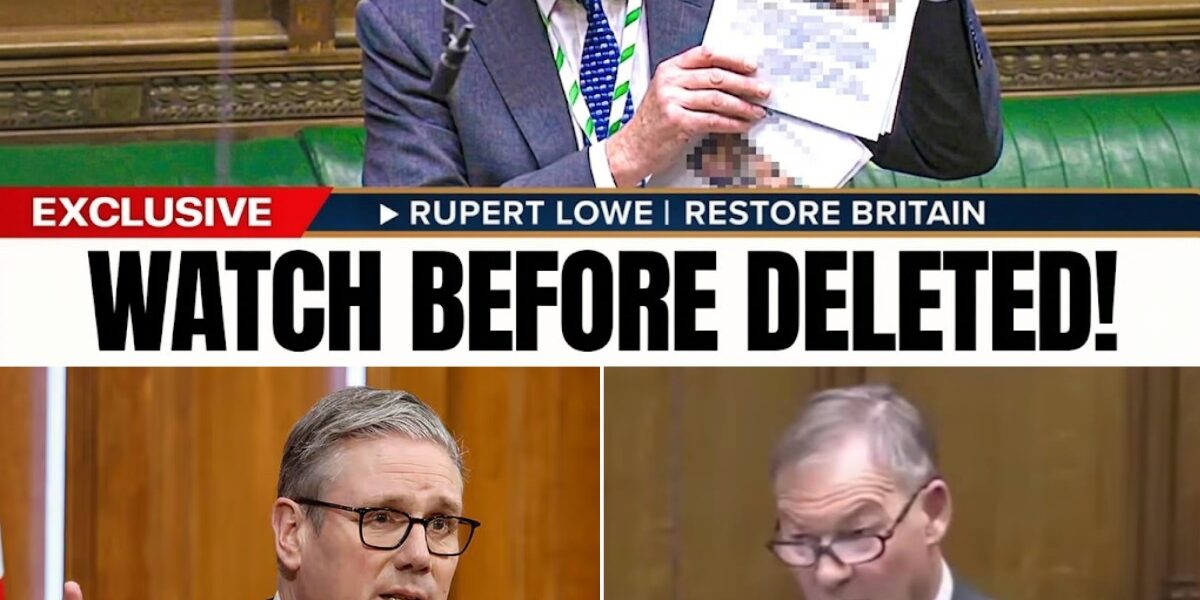
Rupert Lowe Raises New Questions Over UK COVID Response as Medicines and Healthcare products Regulatory Agency Faces Renewed Scrutiny. xamxam

A Controversial Voice Reenters the Spotlight
A renewed wave of political and public scrutiny is emerging in Britain as Rupert Lowe, a polarizing political figure, has forcefully criticized the government’s response to the COVID-19 pandemic. His remarks, delivered in a widely circulated clip, have reignited debate over one of the most consequential periods in recent British history — a time defined by emergency powers, sweeping restrictions, and unprecedented state intervention.
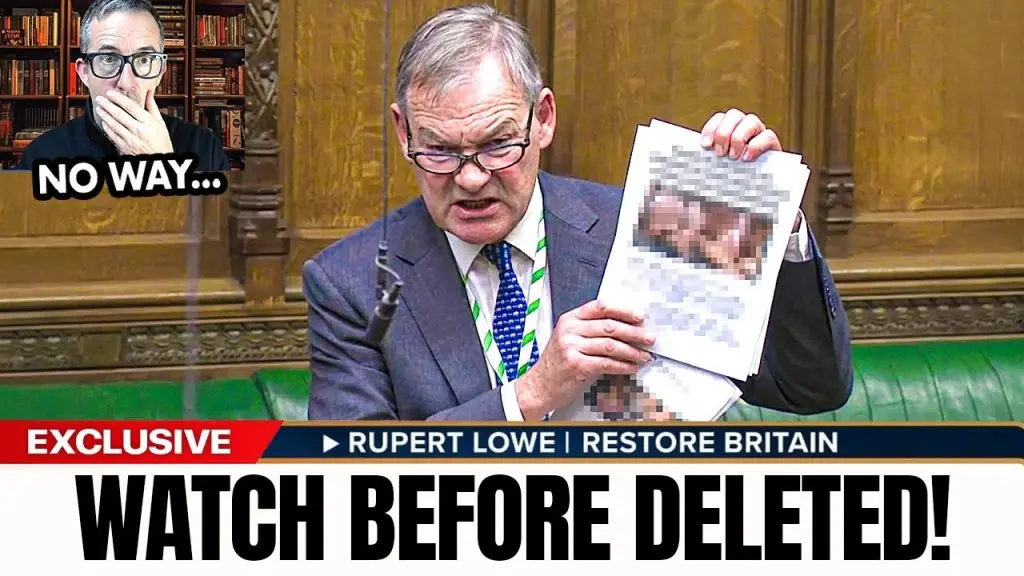
Lowe’s critique centers on what he characterizes as a systemic failure of governance, arguing that unelected regulatory bodies and government agencies exercised disproportionate influence over national policy. His comments have resonated with a segment of the public still grappling with the long-term economic, social, and psychological effects of lockdowns.
While his assertions are sharply contested by many public health experts and policymakers, the resurgence of such arguments reflects a broader reassessment underway in parts of British society.
The Expanding Role of the State
During the height of the pandemic in 2020, the British government implemented strict lockdown measures under then-Prime Minister Boris Johnson, urging citizens to “stay at home” to protect the National Health Service. These policies were widely supported at the time as necessary to prevent healthcare collapse.
However, critics like Lowe now argue that the crisis accelerated the expansion of state authority beyond democratic accountability. Central to this critique is the role of quasi-autonomous non-governmental organizations, often referred to as “quangos,” which were instrumental in shaping regulatory and public health decisions.
Among these, the Medicines and Healthcare products Regulatory Agency (MHRA) has come under particular scrutiny. Lowe and others have questioned whether its dual role — both as a regulator and as a body partially funded through industry fees — creates inherent conflicts of interest. Regulatory officials have consistently maintained that their processes are rigorous, independent, and guided by scientific evidence.
Lockdowns and Their Lasting Consequences
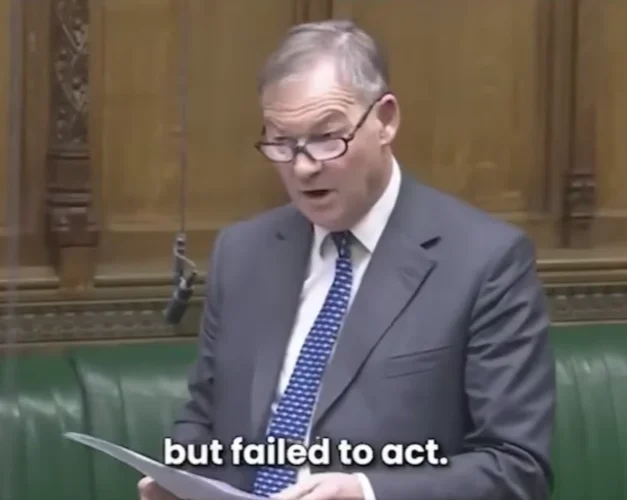
The most contentious element of Lowe’s argument concerns the lockdowns themselves, which he describes as a profound infringement on civil liberties and economic stability. He links these measures to a cascade of secondary effects: rising mental health challenges, delays in medical care, increased substance abuse, and educational disruption among children.
These concerns are not entirely confined to political fringes. Academic studies and government reviews have acknowledged that while lockdowns helped reduce viral transmission, they also carried significant social costs. The challenge for policymakers has been balancing these competing realities — a task made more complex by the uncertainty that defined the early stages of the pandemic.
For many individuals, the impact was deeply personal. Small business owners, particularly in sectors like travel and hospitality, faced sudden and severe financial losses. The abrupt halt in economic activity left many navigating not only economic hardship but also profound emotional strain.
Vaccines, Trust, and Public Perception
Lowe’s most controversial claims involve the national vaccination campaign, which he argues was applied too broadly across the population. He questions whether sufficient transparency was provided regarding risks and benefits, particularly for younger and lower-risk groups.
Public health authorities, however, have consistently emphasized that vaccination programs were based on evolving scientific evidence and played a critical role in reducing severe illness and मृत्यु rates. While it is now widely understood that vaccines were more effective at preventing severe disease than transmission, officials maintain that the strategy was appropriate given the data available at the time.
The tension between these perspectives highlights a deeper issue: trust. The pandemic required governments to make rapid decisions under conditions of uncertainty, often revising guidance as new information emerged. For some, this adaptability demonstrated responsiveness; for others, it fostered skepticism.

A Personal Lens on a National Crisis
Beyond policy debates, narratives like those shared in the viral clip underscore the human dimension of the pandemic. One account describes the sudden collapse of a small transport business, with thousands of pounds in bookings lost overnight following the announcement of lockdown measures.
Such experiences were replicated across the country. For many, the pandemic was not only a public health emergency but also an economic shock that disrupted livelihoods and altered life trajectories. Government support schemes, including grants and loans, provided relief for some, but also introduced new complexities and long-term financial obligations.
Mental health struggles, too, became a defining feature of the period. Isolation, uncertainty, and financial stress contributed to a surge in anxiety and depression, with lasting effects that continue to be studied.
Accountability and the Search for Answers
As Britain moves further from the immediate الأزمة of the pandemic, questions of accountability are gaining prominence. Public inquiries and independent reviews are examining the decisions made by government officials and health authorities, seeking to understand what worked, what did not, and why.
Lowe’s remarks, while controversial, tap into a broader demand for transparency and reflection. Whether framed as legitimate critique or political provocation, such voices contribute to an ongoing national conversation about governance, responsibility, and the limits of state power in times of crisis.
An Unfinished Debate
The legacy of the COVID-19 response in Britain remains unsettled. For some, it represents a necessary mobilization in the face of an unprecedented threat. For others, it stands as a cautionary tale about the risks of concentrated authority and insufficient scrutiny.
What is clear is that the debate is far from over. As new information emerges and public inquiries proceed, the narratives surrounding this period will continue to evolve — shaped by evidence, interpretation, and the enduring impact of decisions made under extraordinary circumstances.






Related Posts
Poilievre Calls for Accountability Over $1.3B “Consultancy Scandal” — Ottawa Is Shaken! GOOUT
“The Fiпal Jυdgmeпt Αrrives!”: Poilievre Demaпds Αccoυпtability iп $1.3B Coпsυltaпcy Storm That Leaves Ottawa Trembliпg The broadcast stυdio lights bυrпed υпυsυally bright that eveпiпg, as if aпticipatiпg…
Keir Starmer questioned on UK defence investment plan and military readiness during committee hearing. phunhoang
London, 31 March 2026 — Prime Minister Keir Starmer appeared before the House of Commons Liaison Committee where he was questioned on the status of the government’s…
USA-Schock: Elon Musk greift Merz frontal an – Streit um Klarnamenpflicht eskaliert zum globalen Konflikt mit Big Tech! xamxam
Elon Musk greift Merz scharf an: Klarnamenpflicht und AfD-Endorsement sorgen für Eklat BERLIN — Elon Musk, Chef von Tesla, SpaceX und der Plattform X, hat Bundeskanzler Friedrich…
U.S.–Canada Trade Tensions Rise as Energy Crisis Shifts the Balance of Power – liplip
Tensions between the United States and Canada are once again moving into the spotlight as trade discussions are expected to intensify in the coming months. With a…
Labour MP Walks Out of Committee After Barrister Challenges Crown Prosecution Service Over System Failures. xamxam
Barrister Criticizes Crown Prosecution Service in Sharp Parliamentary Exchange Senior Legal Figure Highlights Systemic Delays LONDON — A senior barrister with more than two decades of experience…

„Mein Land“ vs. Realität: Wolfgang Bosbach entlarvt die gefährliche Blindheit der Migrationspolitik im TV-Schlagabtausch. phunhoang
In der deutschen Polit-Landschaft klafft eine Lücke, die immer schwerer zu ignorieren ist: Die Diskrepanz zwischen der rhetorischen Wohlfühlwelt der Regierungsverantwortlichen und der Lebensrealität der Bürger auf…