‘MUSLIMS DRAINING UK’: Anti-Islam Protest Erupts Into Violent Fistfights Across Manchester

Clashes in Manchester: Protests, Counterprotests, and a Nation’s Divided Debate
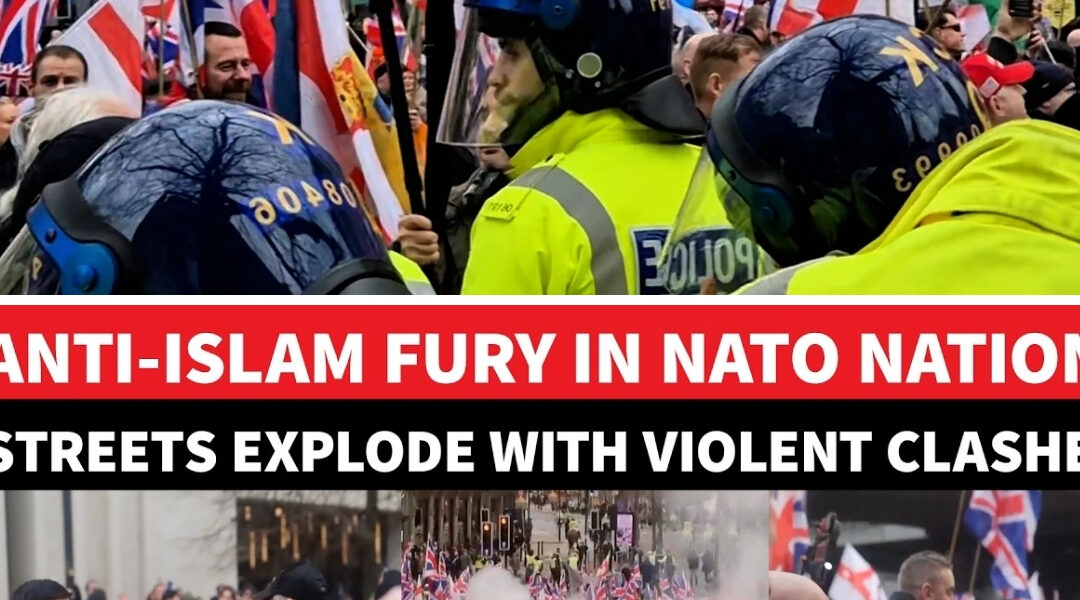
Tensions surrounding immigration and national identity came sharply into focus in the city of Manchester, where rival demonstrations escalated into physical confrontations, highlighting the depth of division within parts of British society.
The incident, which involved a march organized by the political group Britain First and counterprotests from anti-racism and community organizations, reflects broader debates that have been intensifying across the United Kingdom.
According to the transcript , what began as separate demonstrations quickly developed into a tense standoff, with both sides expressing strongly opposing views on immigration, national identity, and social policy.
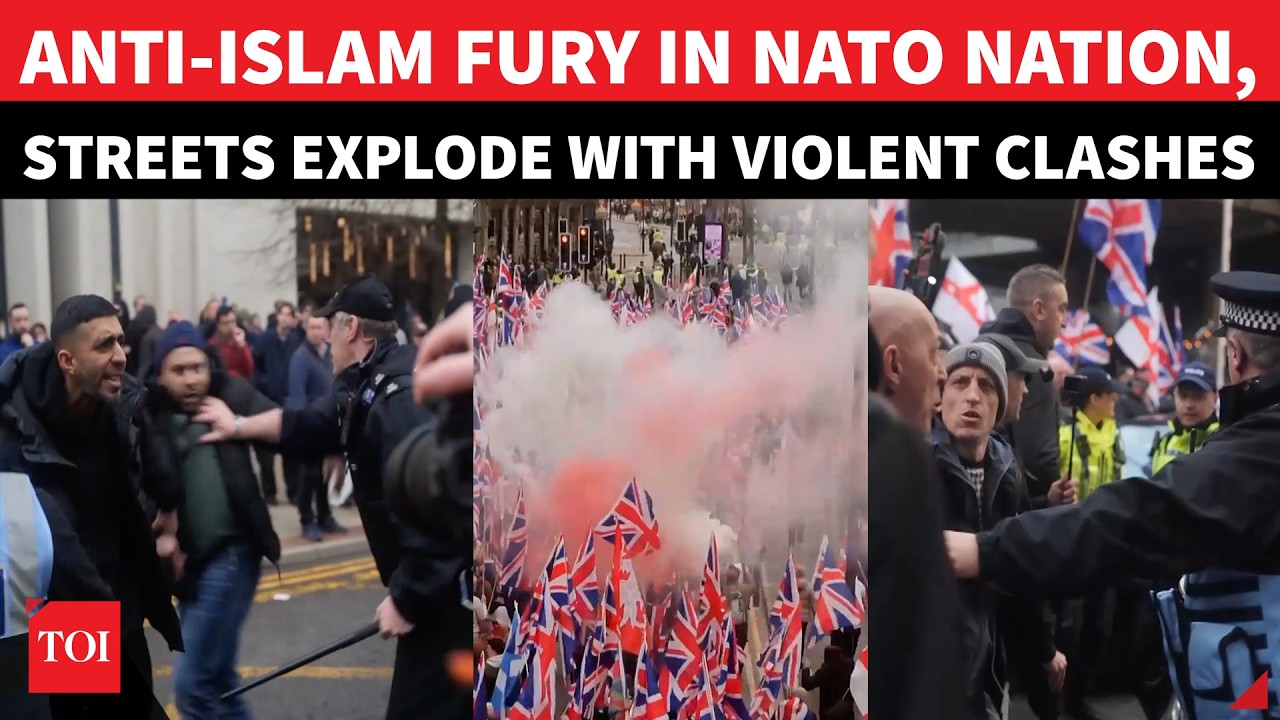
As crowds grew, verbal exchanges escalated into pushing and physical altercations, prompting police intervention to restore order.
Authorities later confirmed multiple arrests related to public disorder, including incidents involving assault and breaches of dispersal measures.
Law enforcement responded by implementing temporary restrictions in the city center, aimed at preventing further escalation and ensuring public safety.

The demonstration organized by Britain First centered on calls for stricter immigration controls, including demands for the deportation of individuals residing in the country without legal status.
Participants carried national flags and voiced concerns about economic pressures, public services, and the perceived impact of immigration on local communities.
Such concerns, while often expressed in strong or controversial terms, reflect anxieties that have been present in segments of the population for several years.
At the same time, counterprotesters gathered under banners promoting inclusion, diversity, and solidarity.
Groups such as Stand Up to Racism and Green Party of England and Wales emphasized the contributions of immigrants to British society, particularly in sectors such as healthcare, education, and public transport.
Speakers at these events argued that many of the challenges facing communities—such as housing shortages and economic inequality—are systemic issues that affect people regardless of background.
The presence of prominent political figures, including Jeremy Corbyn, further underscored the political significance of the moment.
His remarks, along with those of other speakers, focused on the importance of unity and investment in public services as alternatives to division.
This confrontation in Manchester is not an isolated event, but part of a wider pattern of demonstrations across the UK in recent years.
Issues such as asylum policy, housing provision, and public safety have increasingly become focal points of public debate, often drawing strong reactions from different sides.
Polling data suggests that immigration remains one of the top concerns for many citizens, though opinions vary widely on how the issue should be addressed.
For some, the priority lies in stronger border controls and enforcement.
For others, the focus is on humanitarian responsibilities, integration policies, and addressing the root causes of migration.
These differing perspectives illustrate the complexity of the issue, which cannot be reduced to a single narrative or solution.
Experts often point out that such debates are influenced by a range of factors, including economic conditions, political messaging, and media coverage.
In highly charged environments, isolated incidents or strong rhetoric can amplify tensions, making constructive dialogue more difficult.
The events in Manchester demonstrate how quickly public demonstrations can shift from peaceful expression to confrontation when opposing viewpoints collide in close proximity.
They also highlight the challenges faced by authorities in balancing the right to protest with the need to maintain public order.
Ultimately, the significance of these events lies not only in the clashes themselves, but in what they reveal about the current state of public discourse.
They reflect a society grappling with complex questions about identity, belonging, and the distribution of resources, while navigating the pressures of a rapidly changing world.
As the UK continues to confront these issues, the path forward will likely depend on the ability of leaders, communities, and individuals to engage in dialogue that is both honest and respectful.
Only through such engagement can deeply rooted concerns be addressed without further deepening divisions.