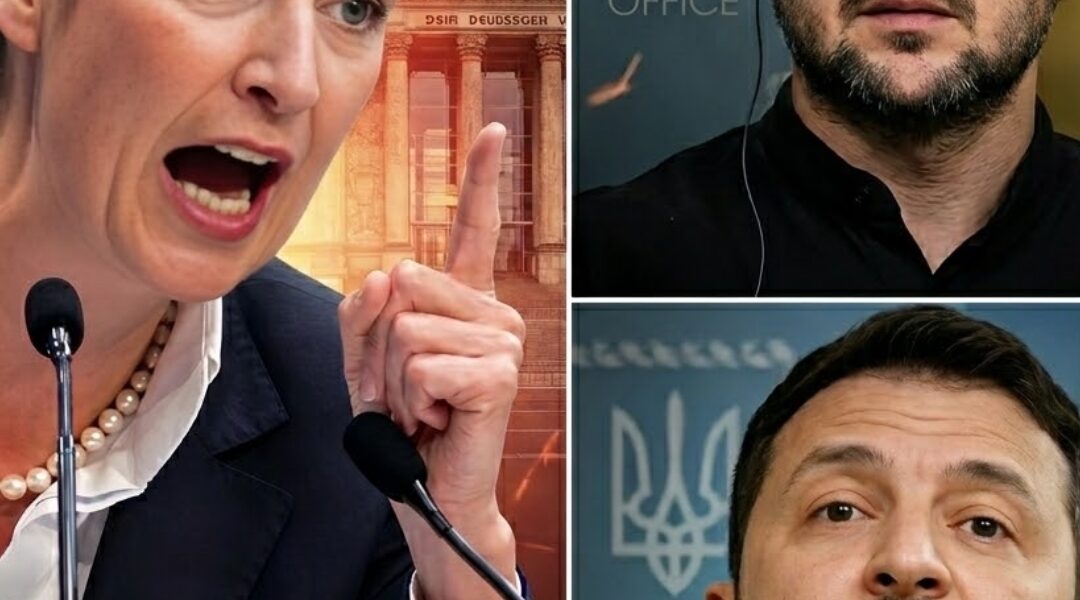
The Ukraine FundingAlice Weidel’s Accusations Against Zelenskyy Ignite a New Political Firestorm in Germany

A growing political controversy has erupted in Germany after AfD co-leader Alice Weidel delivered a forceful speech questioning the management and transparency of Western financial aid to Ukraine.
Weidel directly challenged Ukrainian President Volodymyr Zelenskyy and the German federal government, asking what has happened to taxpayer money that has been allocated for military and humanitarian support.
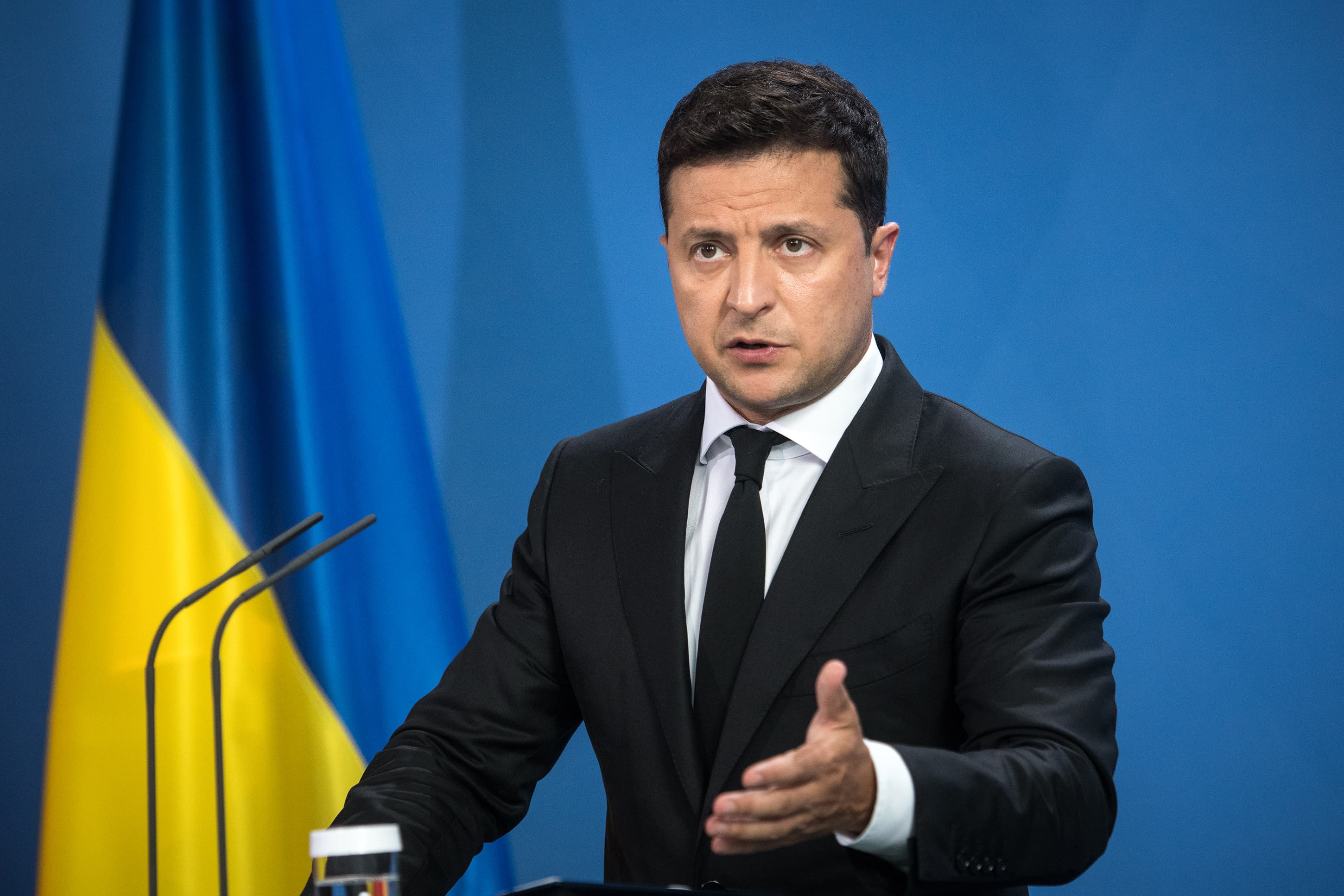
According to publicly discussed estimates, the United States has committed over $200 billion in support, while Ukrainian figures suggest a significantly lower amount has actually been received, raising questions about distribution and oversight.
Weidel and her party, the AfD, argue that this discrepancy reflects a deeper structural issue involving mismanagement, corruption risks, and lack of transparency in international aid channels.
The AfD leadership has therefore called for an immediate suspension of further military deliveries and financial assistance, including advanced weapons systems, until full accountability is ensured.
Weidel also emphasized Germany’s financial burden, pointing to billions of euros in national contributions to Ukraine and the European Union, which ultimately channels significant support toward Kyiv.
By late 2024, Germany had already committed approximately €15.7 billion in direct aid to Ukraine, alongside annual contributions to the EU budget estimated at over €22 billion, which also supports broader assistance programs.
Critics within the AfD argue that these financial commitments are placing increasing strain on Germany’s domestic economy, especially amid concerns over inflation, infrastructure challenges, and public spending priorities.
Beyond financial concerns, Weidel also criticized Germany’s broader foreign policy direction, arguing that the country has shifted away from neutrality and diplomatic mediation in the conflict.
She reiterated the AfD’s position opposing the expansion of military support, stating that continued escalation risks prolonging the war and increasing pressure on European citizens.
The debate has also been influenced by broader discussions in international media and political commentary regarding oversight of foreign aid programs and the effectiveness of monitoring mechanisms.
Supporters of continued aid, however, argue that assistance to Ukraine remains essential for its defense and sovereignty, and that most funds are subject to international auditing standards.
As political tensions grow, the issue has become a major dividing line in German politics, reflecting deeper disagreements over foreign policy, fiscal responsibility, and Europe’s role in the ongoing conflict.
With both sides firmly entrenched, the controversy surrounding Ukraine funding is expected to remain a central issue in Germany’s political landscape, shaping debates over transparency, accountability, and international engagement in the months ahead.