Global Tensions Rise After Intercepted Communications, Missile Incident, and Escalating Regional Developments
Intercepted Communications Spark International Concern
New intelligence reports have triggered growing concern among security officials after encrypted communications believed to originate from Iran were intercepted by U.S. intelligence agencies. According to early assessments, the messages may have been intended as an operational signal to activate sleeper networks outside the country.

Officials have not yet confirmed the scope or authenticity of the communications, and details remain limited. However, the fact that intelligence agencies are publicly acknowledging the interception has already raised alarms among analysts and governments monitoring the situation.
Security experts say that such signals, if verified, could represent a coordinated attempt to mobilize previously dormant networks operating in multiple regions. Authorities across several countries are reportedly reviewing their own intelligence channels and increasing vigilance while waiting for more concrete information.
At this stage, officials emphasize that the situation is still developing and that it is too early to determine the potential impact. Nevertheless, the report has added a new layer of uncertainty to an already tense geopolitical environment.
Missile Incident Over Turkish Airspace
Another major development occurred when a ballistic missile launched from Iran reportedly entered Turkish airspace. According to Turkey’s Ministry of National Defense, the projectile was intercepted by NATO air and missile defense systems operating in the eastern Mediterranean region.
Authorities confirmed that debris from the intercepted missile fell on vacant land within Turkey, and no casualties or injuries were reported.
In an official statement, Turkish defense officials emphasized the country’s commitment to maintaining stable relations with neighboring states but warned that any threat directed toward its territory or airspace would be addressed decisively.
This incident marks the second time in recent days that a missile linked to Iran has entered Turkish airspace, raising concerns about possible escalation. Analysts point out that Turkey’s status as a member of NATO adds significant geopolitical weight to the situation.
While no formal response has been announced yet, Turkish officials indicated that all options remain under consideration.
U.S. Naval Interceptor Credited With Missile Neutralization
Additional details later revealed that the missile was intercepted by a U.S. Navy destroyer positioned in the region. According to a naval official, the vessel used an SM-3 interceptor missile to neutralize the incoming threat before it could cause damage.
This revelation highlights the role of multinational defense coordination in the eastern Mediterranean, where NATO and allied naval forces maintain a significant presence.
Defense analysts say the interception demonstrates the growing reliance on layered missile defense systems in areas experiencing heightened tensions.
Although the missile did not cause casualties, the incident has intensified diplomatic discussions among regional powers and NATO members regarding future security measures.
Fire Reported at Iranian Naval Port
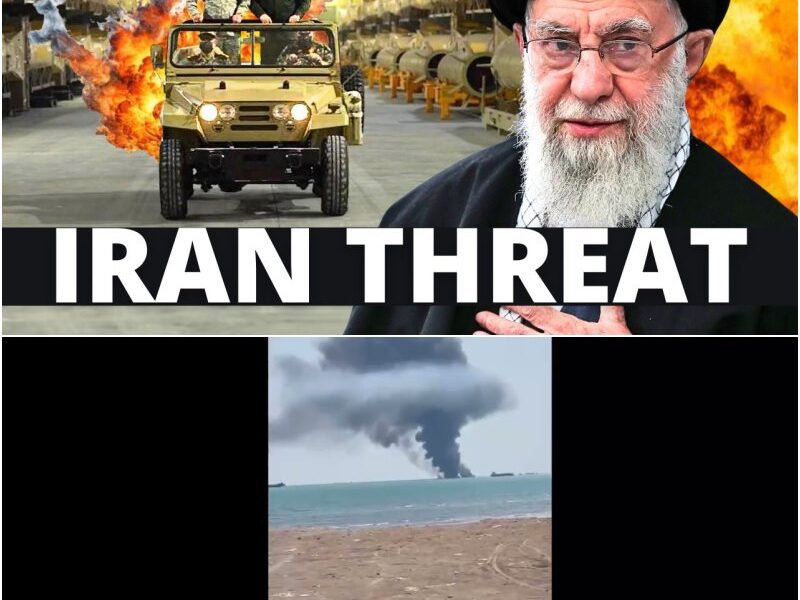
Meanwhile, dramatic images and videos circulating online showed a large fire near Iran’s major naval port of Bandar Abbas. Footage recorded from the shoreline appeared to show a vessel engulfed in flames surrounded by several commercial ships in the harbor.
The identity of the burning vessel was initially unclear, but later analysis by open-source intelligence groups suggested that the ship may have been an Iranian missile corvette belonging to the Soleimani-class fleet.
Comparisons of the ship’s silhouette with known images of vessels in the class led some analysts to believe the damaged ship matched the design profile of one of these missile-equipped corvettes.
If confirmed, the loss would represent a significant setback for Iran’s naval capabilities in the region.
Officials have not released an official statement confirming the cause of the incident, and independent verification remains limited.
Tanker Fire Raises Concerns in the Persian Gulf
At the same time, reports emerged of another maritime incident involving a tanker in the Persian Gulf. Video footage recorded by sailors showed a vessel burning in the distance with smoke rising from the deck.
The exact identity of the tanker and the circumstances surrounding the fire remain unclear. However, the incident has added to growing concerns among shipping companies operating in the region.
The Strait of Hormuz, one of the world’s most critical energy shipping routes, has already seen increased caution from commercial operators due to recent security incidents.
Many shipping companies are reportedly delaying or rerouting voyages while waiting for greater clarity about the risks in the area.
Energy markets are closely watching the situation because disruptions in this narrow waterway could affect global oil supply.
China’s Possible Support for Iran Draws Attention
Another development drawing international attention involves reports that China may be considering additional forms of support for Iran.
According to intelligence assessments cited in several reports, Beijing could provide financial assistance, spare parts, and missile-related components to help sustain Iran’s capabilities.
These reports have not been officially confirmed by Chinese authorities, but analysts say such a move would significantly reshape the strategic landscape in the region.
China has previously maintained diplomatic and economic ties with Iran, and the two countries have cooperated on various infrastructure and trade initiatives.
However, the possibility of more direct assistance has prompted renewed discussion among policymakers in Washington and allied capitals.
Experts note that the broader geopolitical implications could extend far beyond the Middle East.
Naval Escort Operations Continue in the Red Sea
Amid the growing tensions, some positive developments have emerged regarding maritime security.
The Italian Navy frigate Luigi Rizzo recently escorted commercial vessels through the Red Sea, ensuring that cargo ships could reach their destinations safely despite ongoing regional instability.
Images released by defense officials showed the frigate sailing alongside a merchant vessel as part of the protective operation.
Such escort missions are considered crucial for maintaining the flow of global trade during periods of uncertainty.
Security analysts suggest that similar operations may become more common if tensions continue to affect key maritime routes.
Turkish Air Force Conducts Show of Presence
Following the missile incident, Turkey deployed at least six F-16 fighter jets to northern Cyprus as part of what officials described as a “show of presence.”
The aircraft reportedly conducted patrol flights over the region shortly after arriving at their new deployment location.
Military observers interpret the move as a signal that Turkey intends to demonstrate readiness while monitoring developments closely.
Although officials have not linked the deployment directly to the missile incident, the timing has attracted significant attention among regional analysts.
Such displays are often intended to reassure allies and deter potential threats without escalating the situation further.
Explosion and Fire at Bahrain Oil Facility
Another major development occurred in Bahrain, where a large fire broke out at the Bahrain Petroleum Company’s refinery complex following what authorities described as an attack involving a drone or missile.
Videos circulating online showed towering flames and thick smoke rising above the facility during the night.
Emergency crews worked for hours to contain the blaze, using foam and other firefighting methods to prevent the fire from spreading to nearby infrastructure.
Although officials later said that domestic fuel supplies would remain stable, the incident forced the company to declare force majeure on certain operations.
The legal term indicates that unexpected events have disrupted the company’s ability to fulfill some obligations.
The situation has drawn attention from global energy markets, which are already reacting to volatility in oil prices.
Oil Prices React to Regional Developments
Oil markets initially surged following reports of attacks on infrastructure and maritime incidents, with prices briefly rising above $117 per barrel.
However, prices later retreated to around $95 per barrel as traders reassessed the situation and additional supply assurances emerged.
Even with the decline, analysts note that prices remain elevated compared with recent averages.
Energy economists warn that further disruptions to shipping routes or refinery operations could quickly push prices higher again.
For now, markets remain highly sensitive to any new developments from the region.
Air Base Strike Footage Circulates Online
Additional footage shared online appeared to show an airstrike targeting an Iranian fighter aircraft inside a reinforced shelter at the Shiraz air base.
The video captured a missile striking the structure and triggering a powerful explosion, though the extent of the damage could not be independently verified.
Military analysts say such shelters are designed to protect aircraft from attacks, but modern precision munitions can still penetrate or damage them under certain conditions.
The footage, while dramatic, has not been officially confirmed by defense authorities.
As with many videos circulating during rapidly evolving events, verification remains a challenge.
Ukrainian Experts Arrive to Support Defensive Systems
Another noteworthy development involves Ukraine’s decision to send drone interception specialists and equipment to Jordan.
According to reports, the United States requested assistance in countering drone threats in the region, and Ukrainian experts departed shortly afterward.
Ukrainian President Volodymyr Zelensky stated that the team was dispatched quickly after receiving the request.
Ukraine has developed significant expertise in drone interception technology during recent years, and its interceptor drones have proven effective against various aerial threats.
Defense analysts say the deployment highlights the growing role of technological cooperation among allied nations.
Interceptor Drones Seen as Valuable Capability
Images of the interceptor drones believed to be deployed in the region have also circulated online.
The systems are designed to intercept and disable incoming drones before they reach their intended targets.
Experts say the technology could help strengthen defensive networks protecting bases, ships, and critical infrastructure.
The United States has reportedly expressed strong interest in the system due to its effectiveness in previous deployments.
If successfully integrated into regional defenses, such drones could play an important role in reducing the threat posed by unmanned aerial attacks.
A Rapidly Evolving Situation
Taken together, the developments of the past 24 hours illustrate how quickly conditions in the region can change.
From intercepted intelligence communications and missile incidents to refinery fires and naval activity, multiple events are unfolding simultaneously across a wide geographic area.
Officials from several countries have urged caution and emphasized the importance of verifying information as new reports emerge.
For now, governments and analysts around the world continue to monitor the situation closely while preparing for a range of possible outcomes.
The coming days may provide clearer answers about the intercep