
Emma Watson and the Evolving Conversation About Gender and Identity
For years, Emma Watson has been recognized not only as an actress, but as someone willing to engage thoughtfully with social issues that shape modern culture. From feminism to education and equality, she has consistently used her public platform to encourage deeper conversations rather than surface-level reactions. Her recent remarks about gender and identity continue that pattern, reflecting a broader cultural shift toward understanding human identity in more nuanced and inclusive ways.
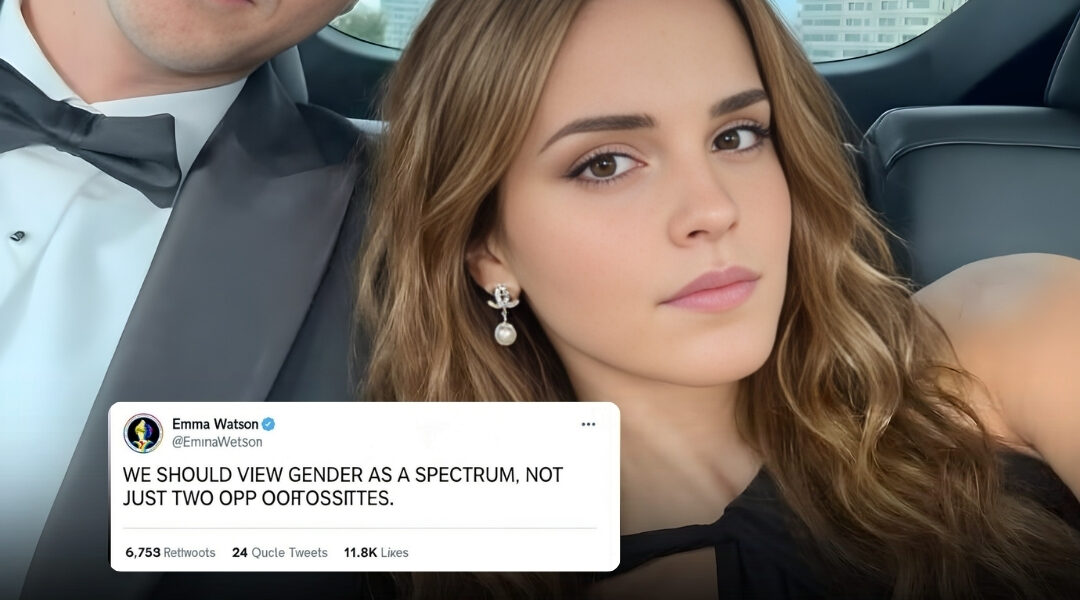
When Emma Watson spoke about gender as a spectrum rather than a strict binary, the conversation quickly expanded far beyond celebrity headlines. Discussions around gender identity have become some of the most significant social dialogues of the modern era because they challenge ideas that many societies treated as fixed for generations. For some people, these conversations represent progress and liberation; for others, they raise questions about tradition, language, and cultural change. What makes Watson’s comments important is not simply the statement itself, but the way it encourages audiences to think more carefully about human experience.
Historically, gender was often framed in rigid categories that left little room for complexity. Social expectations shaped how people were expected to dress, behave, express emotions, and define themselves. Over time, however, many scholars, activists, psychologists, and individuals began questioning whether identity could truly be reduced to simple binaries. Increasingly, conversations around gender have emphasized that human identity exists across a wide and deeply personal spectrum influenced by biology, culture, psychology, and lived experience.
Emma Watson’s perspective aligns with this evolving understanding. Rather than presenting identity as something narrow or universally identical, her comments reflect the idea that people experience themselves differently and deserve the freedom to express that reality honestly. In many ways, her remarks are less about redefining humanity and more about expanding empathy — encouraging society to recognize that not everyone fits neatly into traditional categories.
One reason these conversations matter so deeply is because representation and language shape how people understand themselves. When influential public figures discuss topics like gender identity with openness and respect, they create space for individuals who may have previously felt invisible or misunderstood. Visibility alone cannot solve inequality or discrimination, but it can reduce isolation. For many young people especially, hearing public conversations about identity can provide reassurance that complexity is not something shameful.
At the same time, discussions about gender often generate strong reactions because they intersect with culture, religion, politics, education, and personal belief systems. Social change rarely occurs without tension. Throughout history, shifts in how societies understand race, gender roles, sexuality, or equality have always involved periods of disagreement and adjustment. What matters most is whether these conversations are approached with curiosity and humanity rather than hostility.
Watson’s comments also highlight the growing expectation that celebrities use their influence responsibly. In previous decades, entertainers were often expected to remain politically neutral or detached from social issues. Today, audiences increasingly look to public figures not only for entertainment, but for advocacy and awareness. This can be both powerful and complicated. Celebrities have enormous visibility, but they are also navigating sensitive subjects in front of millions of people with different perspectives and experiences.
Emma Watson has generally approached these conversations carefully, emphasizing education, compassion, and dialogue instead of outrage. That tone may be one reason her voice resonates with so many people. Rather than speaking in absolutes, she often frames social progress as an ongoing process of listening, learning, and rethinking assumptions society once accepted without question.
The broader significance of discussions about gender identity lies in what they reveal about society itself. Conversations about inclusivity are ultimately conversations about dignity — about whether people are allowed to define themselves authentically without fear of rejection or discrimination. They also ask communities to reconsider how systems, institutions, and everyday interactions can become more understanding toward diverse human experiences.
Critics sometimes argue that modern conversations around identity are overly complicated, but supporters counter that human beings have always been complicated. What has changed is not necessarily identity itself, but society’s willingness to acknowledge its diversity more openly. In this sense, debates about gender are not only cultural discussions; they are reflections of humanity’s continuing attempt to better understand itself.
Emma Watson’s remarks contribute to that ongoing dialogue. Whether one fully agrees with her perspective or not, her willingness to engage thoughtfully with questions of identity encourages reflection rather than silence. Public conversations like these challenge audiences to think beyond inherited assumptions and consider how empathy, awareness, and respect can shape a more inclusive society.
Ultimately, the importance of these discussions is not about forcing everyone to think identically. It is about creating a world where people can exist honestly, where differences are approached with understanding rather than fear, and where identity is recognized as something deeply human and deeply personal. In encouraging society to view gender through a more open and nuanced lens, Emma Watson continues to use her influence not merely to entertain, but to inspire conversation about what acceptance and equality truly mean in the modern world.