Breaking the ‘Nanny State’: Rupert Lowe and the Blueprint for a Sovereign Britain

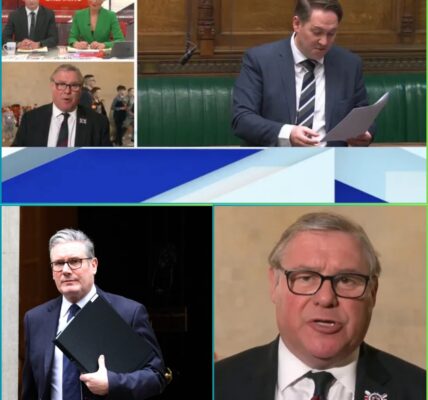
LONDON — Inside the studios of GB News, a familiar setting for the friction of British populism, a recent interview between Rupert Lowe and Jacob Rees-Mogg signaled more than just a meeting of like-minded skeptics. It marked the public unveiling of a 113-page policy document—a dense, logistical blueprint for what Lowe describes as the “liberation of the British people” from the suffocating embrace of a “nanny state” and a border crisis that he argues has reached a point of systemic collapse.

At the heart of Lowe’s philosophy is a radical reassertion of the English Bill of Rights and a return to what he calls “self-determination.” He argues that the modern constitutional flow of power has been illegally inverted: rather than power flowing from the people upward to Parliament, the state has positioned itself as the sovereign dispenser of rights. Lowe’s vision for a “Productive Britain” involves a drastic reduction in the size of the central government, devolving power back to the county and shire levels, and leaving Parliament as a minimal oversight body.
The most visceral of his proposals concerns the ongoing migration crisis. Lowe pointed to a “goddamn disaster” in border control, citing Freedom of Information (FOI) requests that suggest the government is failing to record even the most basic data on thousands of individuals entering the country. “Who are you? Where have you come from? What is your criminal history?” Lowe asked, noting that these questions remain unanswered while individuals are granted indefinite stay or simply vanish into the shadows of the British infrastructure.
The Restore Britain paper is the first of its kind to detail how the mass removal of illegal migrants could be achieved within a two-to-three-year window. The proposal calls for a “Great Clarification Act” to reassert parliamentary sovereignty over the courts, effectively bypassing the legal obstacles currently presented by the European Convention on Human Rights (ECHR). By “voiding” rather than merely repealing the Human Rights Act and the Equality Act, Lowe aims to strip away the legal architecture that he believes has made the British asylum system “broken and unfit for purpose.”
The Logistics of Removal
Operationally, the plan is built on a two-pronged strategy: “Voluntary Departures” and “Enforced Removals.” By creating a genuinely “hostile environment”—removing the financial and social incentives that currently sustain illegal residency—the paper estimates that half a million people could choose to leave annually. For those who remain, the document outlines a logistical roadmap for 150,000 to 200,000 enforced removals per year. Lowe is careful to emphasize that this is not a blanket expulsion of all foreign nationals, but a targeted removal based on legality, criminality, and financial self-sufficiency.

Dismantling the Nanny State
Beyond the border, Lowe’s agenda is one of radical economic deregulation. He proposes the total abolition of Inheritance Tax (IHT), which he describes as a “small razor of tax” that causes disproportionate administrative burden, and a significant raising of the VAT threshold. These measures are designed to release “honest people” from a state that has become a “burden on the back of productive Britain.” To Lowe, the pursuit of a life unfettered by government interference is the ultimate goal of his movement.
The Hurdle of Voter Apathy
Despite the specificity of the 113-page document, Lowe identifies two significant barriers to his “Restore” agenda: the current first-past-the-post voting system and widespread voter apathy. He argues that the current electoral framework is designed to protect an “establishment and their cronies,” leaving the average citizen feeling unrepresented. Only by mobilizing a “crazy level” of momentum, he suggests, can the public hope to break the cycle of “ineptitude” that defines the modern Westminster consensus.
A Return to Shires and Self-Governance
The decentralization of power is perhaps the most traditional aspect of Lowe’s vision. He advocates for a “smallest possible Parliament,” where counties are responsible for their own governance. This return to localized power is presented as a necessary correction to a state that has grown too large to be efficient and too distant to be accountable. In Lowe’s view, the closer the government is to the people, the less likely it is to become a “nanny.”
The “Common Sense” Defense
Anticipating the inevitable accusations of extremism, Lowe frames his policies as “basic common sense.” He maintains that requiring individuals to support themselves financially and removing those with criminal records should not be a controversial position in a sovereign nation. However, the proposal to repeal the ECHR and the Human Rights Act places him in direct conflict with the legal and political mainstream, a fight he appears eager to embrace.
A Blueprint for the Future or a Populist Pipe Dream?
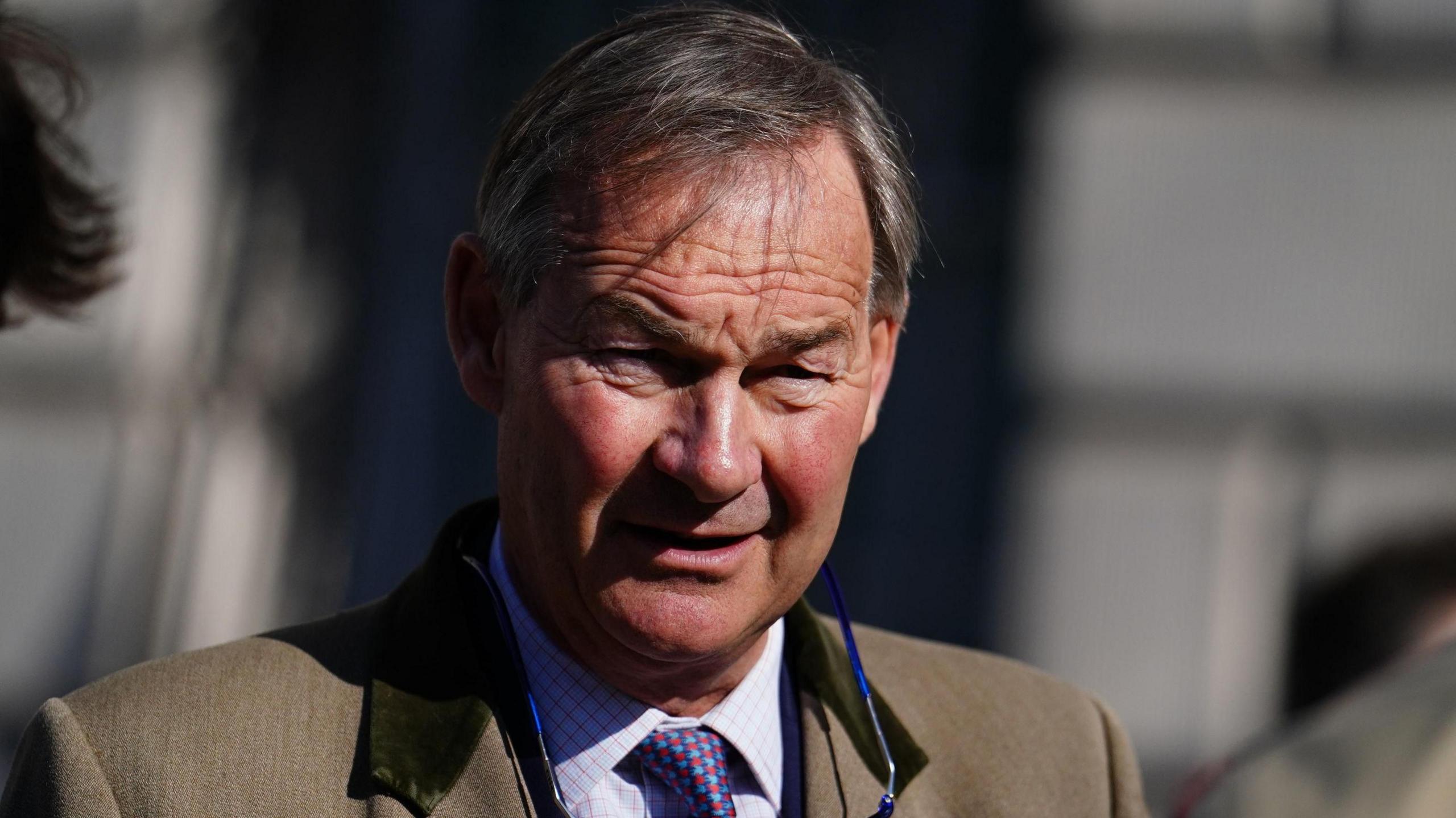
Critics will undoubtedly question the feasibility of such a massive logistical undertaking, especially the forced removal of hundreds of thousands of people in a democratic society. Yet, for the supporters of Restore Britain, the 113-page roadmap is a refreshing change from the “empty promises” of the major parties. It offers a tangible, costed alternative to the status quo, grounded in a belief that the British people are ready for a rupture with the current system.
Conclusion: The Momentum Builds
As Rupert Lowe gains traction on mainstream platforms like GB News, his message of “unfettered pursuit of life” is beginning to reach a wider audience. Whether his roadmap for mass deportation and economic liberation can survive the rigors of an election cycle remains to be seen. What is clear, however, is that the frustration with the “nanny state” has found a detailed and unapologetic voice.