London’s Stunning Revolt: What Just Happened to the Al-Quds March Changes Britain Forever — Even Muslim Mayor Sadiq Khan Couldn’t Stop It.

The decision, made in March 2026, marks a dramatic turning point in Britain’s long and often painful debate over integration, public order, and cultural identity — and it has exposed deep fractures in the political establishment that even London’s Muslim mayor, Sadiq Khan, could not prevent.
Critics argued the event had become a platform for extremism disguised as solidarity with Palestine.
Sadiq Khan, London’s mayor since 2016, consistently defended the march.
When the London Assembly passed a unanimous motion in 2017 — supported by every political party — calling for it to be stopped, Khan shrugged it off, stating the event could not be banned “so long as it was held within the parameters of the law.
” That phrase became symbolic of what many saw as his unwillingness to confront difficult issues when they risked alienating his core voter base.
But in early 2026, the ground shifted dramatically.
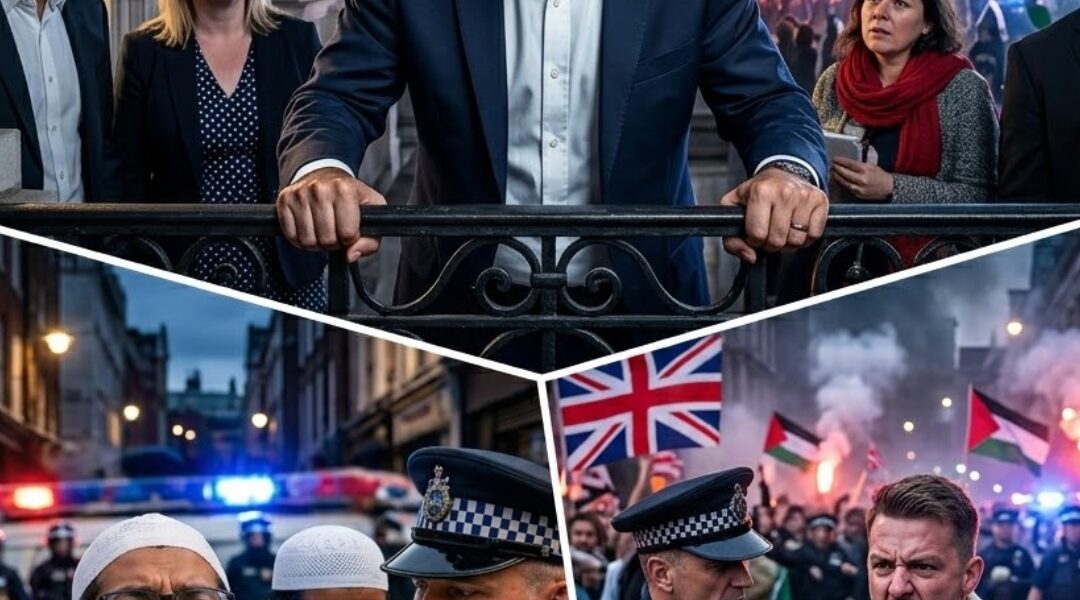
Metropolitan Police Commissioner Sir Mark Rowley approached the Home Office with a formal request to ban the march outright, citing credible intelligence of serious risk of public disorder.
He invoked Section 13 of the Public Order Act 1986 — powers so rarely used that they had not been applied since 2012 against the English Defence League.
The decision required personal approval from the Home Secretary.
The march that Sadiq Khan had spent nearly a decade saying could not be stopped was halted in a single afternoon — without needing the mayor’s approval.
Khan was merely informed as a matter of procedure.
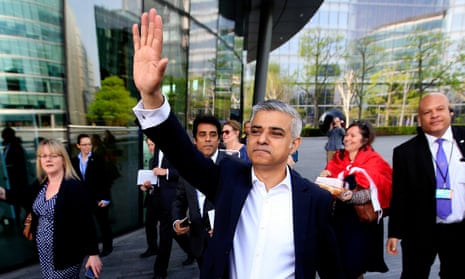
His public response was muted: a carefully worded statement about the importance of the right to protest that stopped short of outright opposition.
To many observers, it revealed a mayor who had long hidden behind legal technicalities rather than exercising leadership when it mattered most.
This single act has ignited fierce debate across Britain.
Supporters hail it as a long-overdue assertion of British values and public order.
They argue the ban proves the state possesses the legal tools to protect citizens when politicians finally summon the courage to use them.
Critics, including the Islamic Human Rights Commission, have condemned the decision as politically motivated and influenced by “Zionist pressure,” a response widely criticised as veering into antisemitic territory.
The group has already announced it will seek legal advice and challenge the ban in court.
For years, many Britons felt their concerns about rapid demographic change, integration failures, and rising extremism were dismissed as racist or Islamophobic.
Politicians, media outlets, and cultural institutions repeatedly told the public that nothing could be done — that free speech and human rights made any restriction impossible.

The successful use of Section 13 has shattered that narrative.
It has demonstrated that when the political will exists, the British state can act decisively to protect public order and shared values.
Reform UK, led by Nigel Farage, has surged in popularity by openly addressing issues that mainstream parties long avoided.
Policies once considered fringe — such as a burqa ban, making Sharia law illegal in Britain, and proscribing the Muslim Brotherhood — are now part of a platform polling at around 24%.
The Overton window, the range of ideas considered acceptable in public discourse, has shifted dramatically to the right.
What was unsayable five years ago is now being debated on the airwaves and in Parliament.
This moment also exposes the difficult position of moderate British Muslims.
Many quietly oppose the extremism displayed on such marches and feel poorly represented by politicians like Sadiq Khan, who often appear to court the loudest and most radical voices within their community.
The failure to draw clear boundaries has contributed to rising anti-Muslim hate crimes, not because the state has been too harsh, but because legitimate concerns were suppressed for too long, driving frustration into less constructive channels.
The Al-Quds ban is not occurring in isolation.
In Manchester, hundreds of Britain First supporters marched through the city centre calling for mass deportations.
While some elements of such movements are extreme, their existence reflects deep public frustration with a political class that spent decades denying the scale of the problems ordinary citizens were experiencing in their own neighbourhoods.
The deeper issue remains unresolved.
Britain still grapples with foreign-funded mosques promoting doctrines incompatible with British law, “no-go” areas where police tread carefully, informal Sharia councils operating in the shadows, and communities where integration has largely failed.
These challenges will require far more than banning one annual march.
They demand sustained political courage, honest public debate, and policies that prioritise shared British values over the fear of causing offence.
Yet the events of March 2026 represent something profound.
After 40 years of what many viewed as political cowardice, the British state finally drew a line.
It declared that certain expressions — regardless of their claimed religious or political motivation — will not be tolerated when they threaten public order and inflame community tensions.
Sadiq Khan’s inability to prevent the ban, despite nearly a decade in power, symbolises a deeper shift.
The machinery of the British state does not require any single mayor’s blessing to act in defence of public safety and national values.
The precedent has now been set.
The tools have been used.
The political class has been shown that the sky does not fall when difficult decisions are made.
Whether this ban survives legal challenge remains to be seen.
The Islamic Human Rights Commission and its allies will almost certainly fight it in the courts.
But even if the ban is eventually overturned, something fundamental has already changed.
The British public has witnessed that action is possible.
The myth of powerlessness has been broken.
The quiet majority has found its voice — and it is growing louder.
Britain stands at a crossroads.
The coming years will determine whether this moment becomes the start of a genuine reassertion of British identity and values, or merely a temporary pause before the old patterns of appeasement and denial return.
One thing is already clear: after March 2026, it will be much harder for politicians to claim that “nothing can be done.For the first time in a long time, many British citizens feel that their government might finally be listening.
After 40 years of marches, tension, and political hand-wringing, that small but significant shift feels like a genuine beginning — and in today’s Britain, a beginning is no small thing.