QUEBEC’S SHOCK BAN: STREET PRAYERS OUTLAWED AFTER CHRISTIANS PHYSICALLY REMOVE MUSLIM GROUP.

THE TIDE IS TURNING: HAS ONE-SIDED TOLERANCE JUST ENDED IN THE WEST?
In a dramatic confrontation that is sending ripples across North America, Christians in Montreal have drawn a bold line in the sand
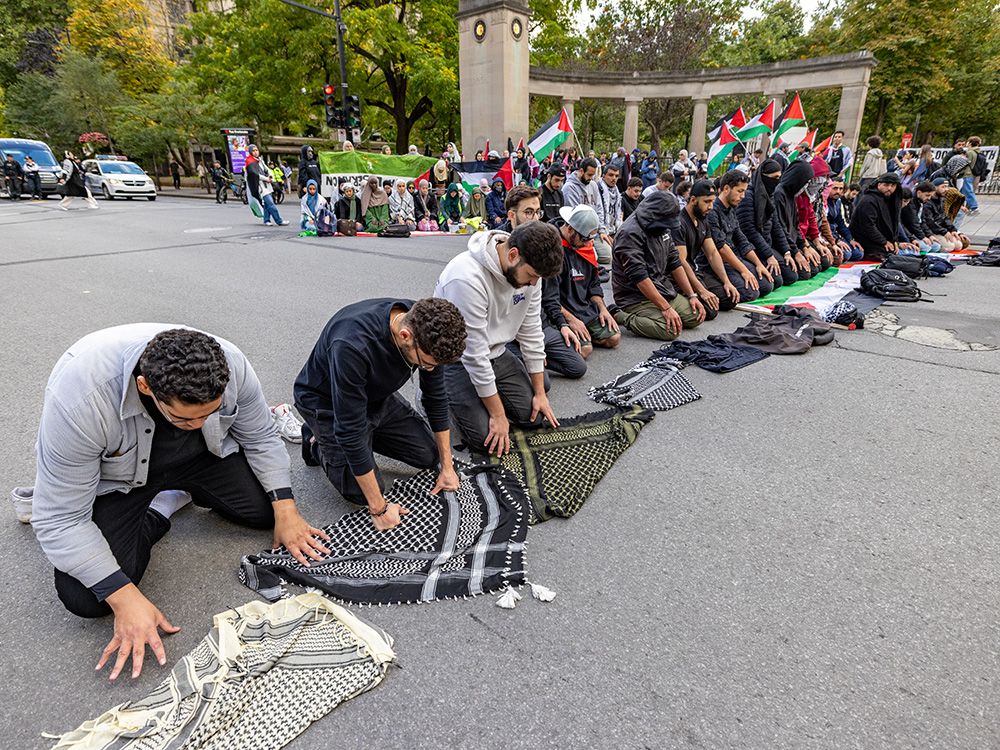
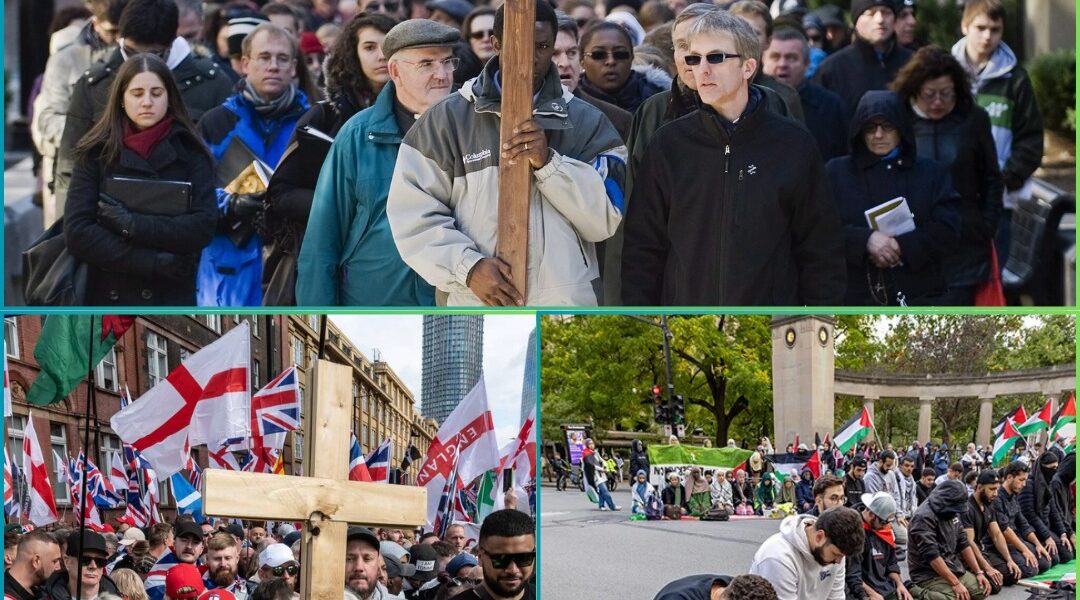
When a large group of Muslims arrived to stage a mass prayer session directly outside a Catholic church, local Christians did not respond with passive tolerance or calls to police.
Instead, they physically removed the demonstrators from the church grounds, an act of defiance that has now triggered sweeping government action.
The Quebec government responded with unprecedented speed and force.
In a landmark decision, authorities have officially banned all street prayers across the entire province, describing them as deliberate acts of provocation against local communities and public order.
This move marks a significant shift in how Canadian authorities are handling religious demonstrations in public spaces, signaling that the era of unrestricted accommodation may be coming to an end.
The Montreal incident was not an isolated spark.
Across the West, similar scenes of organized disruption have been multiplying.
In Texas, a man stormed into an active Catholic Mass and began praying loudly to a different prophet, interrupting the sacred service and alarming worshippers.
In Miami, a Jewish father was forced to draw his weapon to protect his children from a stranger hurling anti-Semitic slurs during one such public confrontation.
From Dallas to other major cities, groups have blocked busy roads during rush hour, turned public squares into prayer zones, and used religious gatherings as visible displays of territorial claim.
What happened outside that Montreal church has crystallized growing frustration.
For years, many Western communities have practiced one-sided tolerance — allowing public prayers, street blockades, and interruptions of sacred spaces in the name of multiculturalism.
But patience appears to have reached its limit.
Citizens are no longer willing to surrender their neighborhoods, churches, and public areas without resistance.
The pushback is becoming louder, more organized, and in some cases, more physical.
The Quebec ban represents a turning point.
By labeling street prayers as provocations, the provincial government has sent a clear message: public spaces belong to everyone, not to any single religious group seeking dominance.
Church leaders and local residents have welcomed the decision, describing it as long-overdue protection for their right to worship without intimidation or disruption.
This shift is part of a broader awakening.
Across Europe and North America, communities are beginning to reclaim their streets and cultural landmarks.
Reports continue to emerge of churches being targeted, roads paralyzed during peak hours, and sacred services interrupted.
In many cases, these actions are not spontaneous but appear coordinated, designed to test boundaries and assert presence in Western cities.
The Montreal Christians’ decision to physically stand their ground has resonated far beyond Canada.
Videos and eyewitness accounts of the confrontation spread rapidly online, sparking intense debate.
Supporters view it as justified self-defense — ordinary people protecting their faith and community after years of perceived one-way concessions.
Critics warn that such actions risk escalation and could deepen social divisions.
Yet the government’s swift ban suggests that officials are increasingly siding with those demanding respect for local norms and public peace.
Experts point to a pattern: the weaponization of prayer as political theater.
What was once private worship has, in some instances, become a tool for visibility and territorial marking.
Blocking streets, facing churches, and interrupting services are seen by many as calculated moves rather than innocent expressions of faith.
The response in Quebec may inspire other provinces and states to reconsider their own policies on public religious demonstrations.
As tensions rise, the fundamental question echoes louder than ever: Is the era of endless, one-sided tolerance finally over? Are Westerners waking up and reclaiming their public spaces, churches, and streets before it is too late? The Montreal showdown suggests the answer may be yes.
Residents in affected neighborhoods report a renewed sense of empowerment.
For the first time in years, many feel their voices are being heard by authorities.
The physical removal in Montreal, followed by the provincial ban, has become a powerful symbol — proof that standing firm can produce real change.
The incidents in Texas and Miami further highlight the urgency.
When sacred spaces are violated and families feel threatened in broad daylight, the social contract of mutual respect begins to fracture.
Citizens are demanding that governments enforce neutrality in public spaces rather than allowing any group to dominate them.
This is no longer about isolated events.
It is about the soul of Western societies and whether they will preserve the secular, pluralistic values that have defined them for generations.
The pushback is gaining momentum — from Montreal’s church steps to American streets — and it shows no sign of slowing down.
The confrontation in Montreal has ignited a national and international conversation.
As more communities watch and learn, the message is unmistakable: Western tolerance has limits, and those limits are now being firmly enforced.
The days of unchecked provocation in the name of prayer may be numbered.