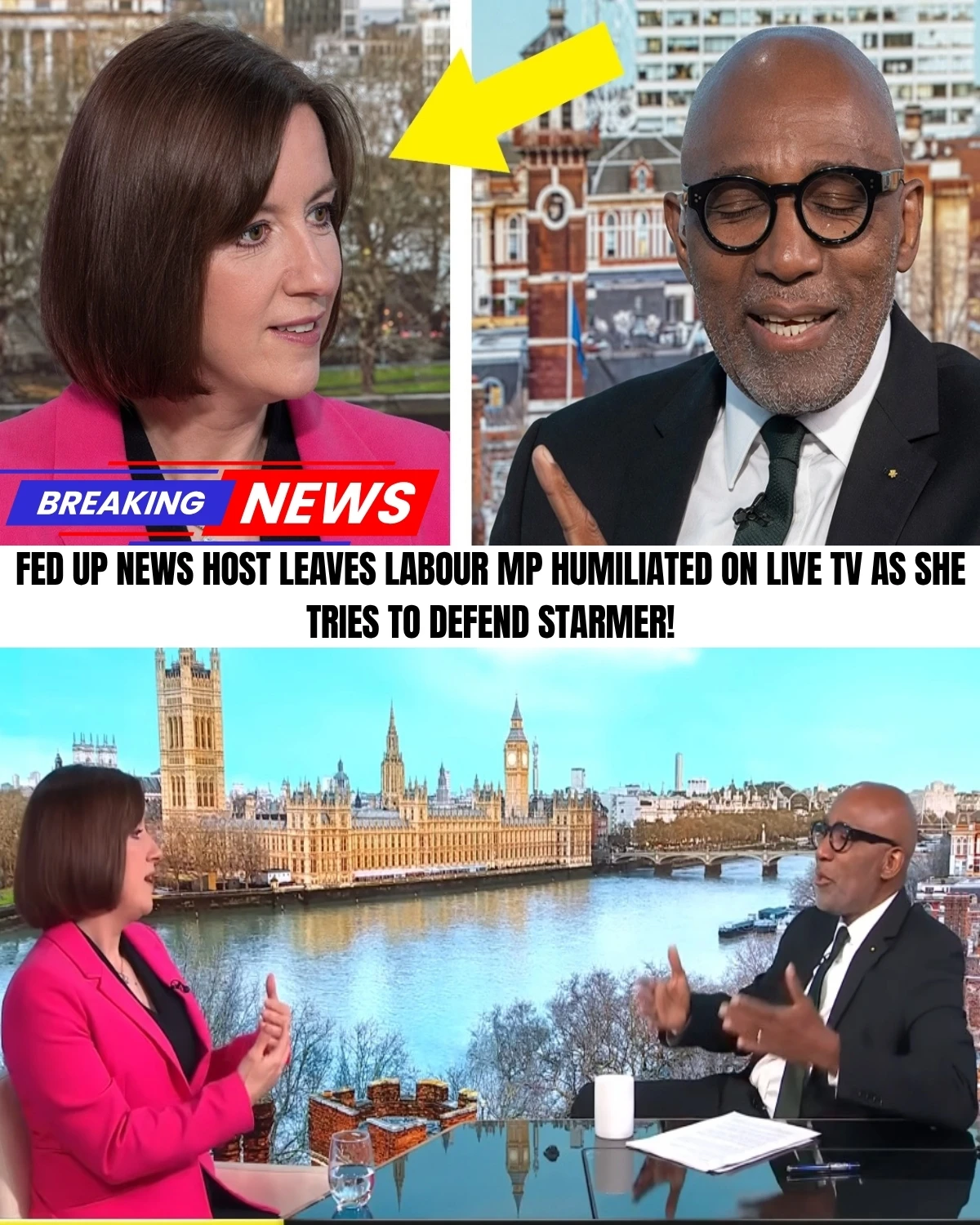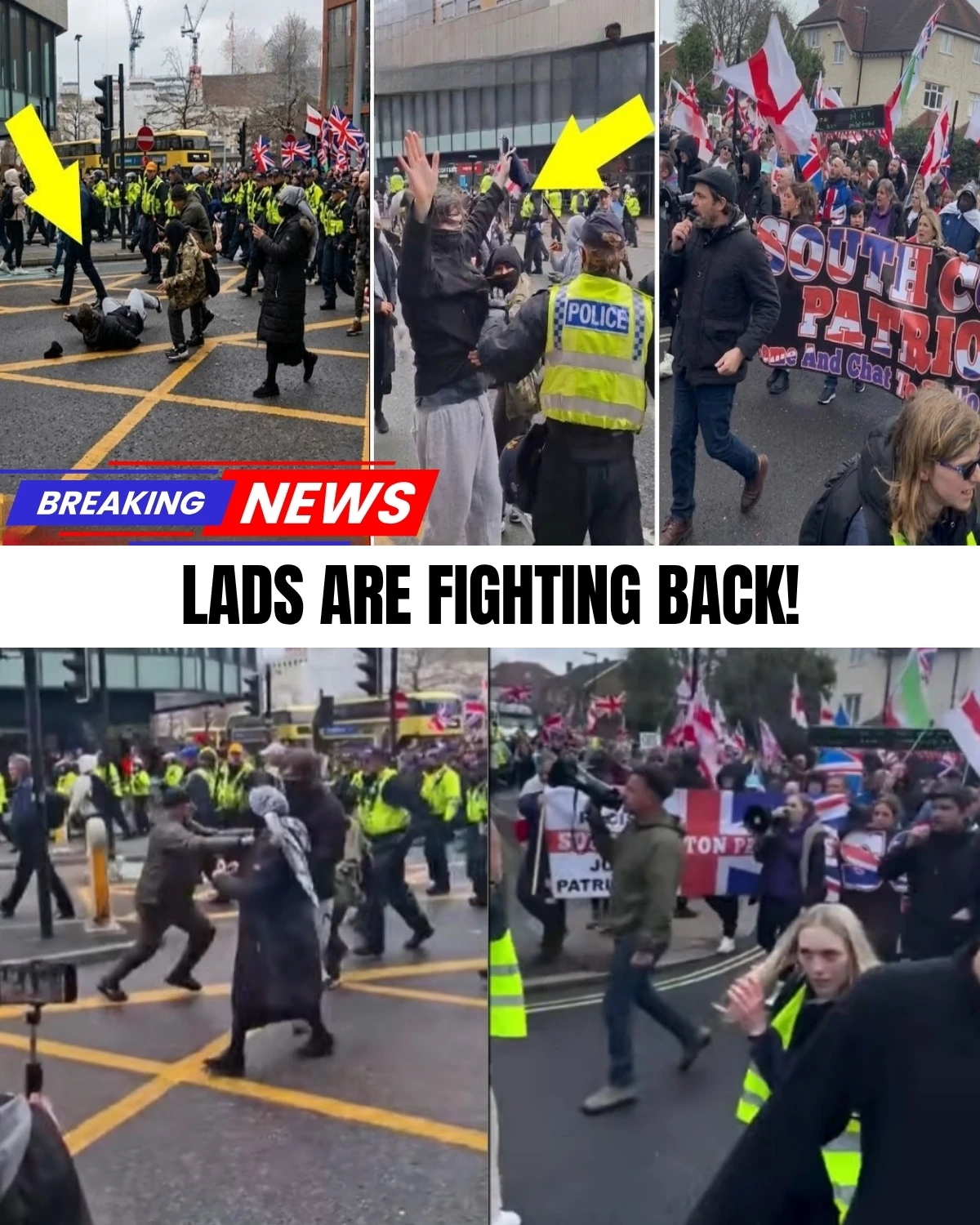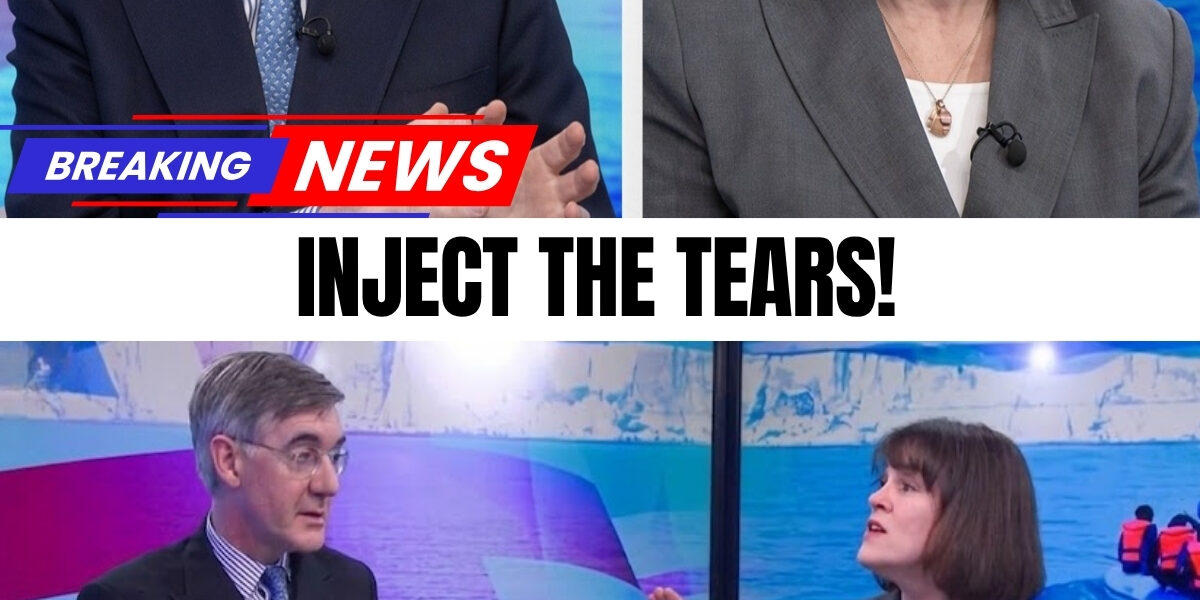
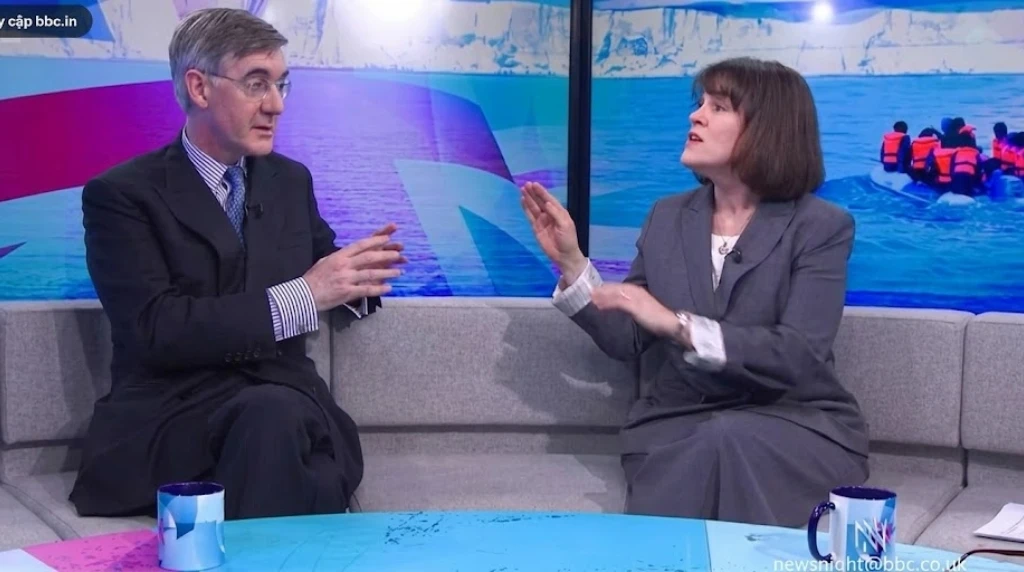
The English Channel crisis just hit a massive breaking point! 🌊🇬🇧 Jacob Rees-Mogg and a top Labour MP just faced off in a brutal televised clash that’s going viral. From the controversial Rwanda Plan to “secret” open-border agendas, the tension was through the roof!

The issue of illegal immigration and small boat crossings in the English Channel has once again ignited the British political arena. A recent televised debate showcased a fierce confrontation between opposing ideologies, highlighting two starkly different approaches: the necessity of safe, legal routes versus the implementation of strict deterrence policies.
1. The Crisis Context and the Labour Perspective
The refugee and migrant crisis in the Channel has become one of the most significant policy challenges for successive governments. Opening the debate, a Labour MP condemned the current situation, focusing on the humanitarian aspect of the tragedy. She asserted that asylum seekers are being driven into illegal and perilous situations by organized criminal gangs.
The Labour representative argued that instead of extreme measures, the UK needs a more serious system based on international cooperation. She emphasized maintaining effective relationships with France and European partners. The core of Labour’s proposed policy is the establishment of “safe and legal routes.” The logic presented is simple: with legal pathways available, migrants would not have to risk their lives on small boats, effectively cutting off the revenue stream for human trafficking syndicates.
2. The Conservative Counter-Argument: A Strategy of Deterrence
In stark contrast, Conservative politician Jacob Rees-Mogg countered that legal routes do not solve the root problem but rather exacerbate it.
Rees-Mogg cited a study from the Center for Policy Studies (CPS), pointing out that under current international conventions, approximately 700 million people worldwide technically qualify for asylum status in the UK. He argued that the British infrastructure and economy could not possibly sustain such a massive influx if legal access were granted to everyone. Consequently, he concluded that the only viable solution is “deterrence.”
To bolster his stance, Rees-Mogg referenced international examples of hardline immigration policies. He pointed to former US President Donald Trump and the Hungarian government under Prime Minister Viktor Orbán as examples of leaders who “effectively controlled” illegal immigration through strict policies, including immediate deportation. Rees-Mogg maintained that once a migrant reaches a safe first country (such as France), they should not be permitted free movement to the UK; if they attempt to do so, they must be deported.
3. Climax of Tensions: The Rwanda Plan and Data Disputes
One of the most contentious topics was the Rwanda deportation scheme—a flagship Conservative policy. Rees-Mogg defended the plan, arguing that even before full implementation, its deterrent effect was real. He claimed that as the Rwanda legislation neared enactment, many migrants avoided the UK and redirected toward the Republic of Ireland, leading to a drop in arrivals.
The Labour MP immediately dismissed this claim, calling the Rwanda plan a “total failure” and a “gross waste of public money.” She also fiercely criticized the use of the 700-million figure from the CPS report, labeling it as baseless misinformation and a blatant distortion of the European Convention on Human Rights. She called for more responsibility in political discourse rather than spreading fear with unrealistic statistics.
The dialogue peaked when Rees-Mogg pressured the Labour MP to provide a specific cap on how many refugees her party would accept annually. Facing the direct question, the MP declined to provide a fixed number, asserting instead that the UK is a “decent and compassionate country.” This avoidance was immediately framed by the Conservative side as evidence that Labour secretly intends to open the gates to hundreds of thousands of immigrants.
4. Public Reaction and Media Analysis
The event sparked a wave of reactions across media and social platforms. Clips of the debate shared by right-leaning channels, such as British Stand, accompanied by commentary, were highly critical of the Labour position.
Media commentators from these outlets rejected Labour’s “humanitarian” framing, arguing that those crossing the Channel are “economic migrants” rather than genuine refugees. The argument posits that these individuals have already passed through multiple safe European nations but specifically choose the UK to benefit from a superior social welfare system. These outlets also highlighted polls suggesting that the British public remains strongly opposed to further illegal immigration.
5. Conclusion
This brief but adversarial debate serves as a microcosm of the political deadlock in the UK regarding immigration.
-
Labour continues to oppose harsh deterrence models, relying on human rights values and demanding stronger regional cooperation.
-
Conservatives and right-wing voices are increasingly convinced that only strict deportation, punishment, and physical barriers can end the Channel crisis.
As critical elections approach, border management is no longer just a televised shouting match; it remains a decisive factor shaping the future of British law, order, and diplomacy. The UK faces a historical choice: uphold its image as an open, compassionate nation with legal asylum routes, or transform into a “fortress of deterrence” to exert strict control over its borders in the face of global migration pressures.