The UK is on a knife-edge! 🧨 As May 16th looms, Kemi Badenoch just had a brutal face-off with the BBC over the “Unite the Kingdom” march. 😱 While the reporter tried to shut down Tommy Robinson’s rally, Badenoch fired back with a SHOCKING demand!

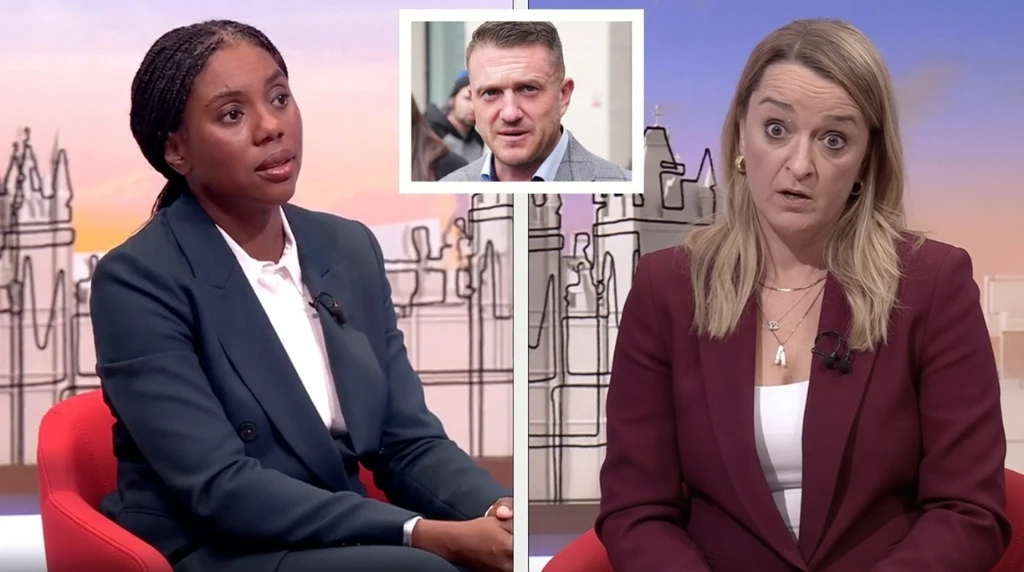
In a recent live interview on the BBC, politician Kemi Badenoch engaged in a tense debate with a reporter regarding two major marches scheduled for May 16th. Badenoch firmly rejected the comparison between pro-Palestine protest movements and the “Unite the Kingdom” march, while calling for a moratorium on Palestinian demonstrations, arguing they are providing cover for antisemitic behavior.
1. Event Context: The May 16th Tensions
A fierce political debate is erupting in the UK over the limits of freedom of speech and public order. This conflict centers on May 16th, when two large-scale marches are expected to take place. On one side is the pro-Palestine movement, and on the other is the “Unite the Kingdom” march, organized by Stephen Yaxley-Lennon (widely known as Tommy Robinson).
2. The BBC’s Question and the Comparison
During the interview, the BBC host questioned Badenoch on whether the government should consider blocking the “Unite the Kingdom” rally. The reporter argued that events organized by Tommy Robinson—a previously convicted activist—have historically caused many people to feel threatened and have led to arrests for racially aggravated offenses.
3. Kemi Badenoch’s Defense: Highlighting Core Differences
Rejecting the comparison, Badenoch asserted that there is “something very specific” occurring at pro-Palestine marches that distinguishes them from standard domestic policy protests. She pointed out that these demonstrations regarding international issues not only drain a massive security budget but also lead to the “normalization of violence against a minority group.”
To illustrate her security concerns, Badenoch highlighted the current state of insecurity felt by the British Jewish community. She noted that Jewish primary schools must now station security guards outside due to fears for the children’s safety. Additionally, she cited the vandalism and graffiti targeting Jewish-owned businesses, including the Gail’s Bakery chain.
4. Criticizing Extremist Slogans and the Call for a Moratorium
As the BBC reporter continued to pivot back to security concerns surrounding the “Unite the Kingdom” march, Badenoch reacted strongly, dismissing the line of questioning as a “whataboutism” tactic: “We keep doing this, asking ‘what about that’ every time I mention the focus.” While acknowledging that the “Unite the Kingdom” march was not perfect, she insisted that the threat from Palestinian protests required more urgent intervention.
She vehemently condemned the use of slogans such as “globalize the intifada” and “from the river to the sea,” labeling them as language that is completely unacceptable in a peaceful society.
Concluding the discussion, Badenoch issued a definitive demand:
“It is time to put a moratorium on these marches. Of course we believe in freedom of speech and the right to protest. But these are no longer protests. They are being used as a cover for antisemitic activity, and I think it is time for the state to step in.”
General Assessment
This interview reflects the deep societal divisions and legislative challenges currently facing British officials. Balancing the fundamental right to free speech against the obligation to protect communities from hate speech remains a complex puzzle, particularly as international events continue to have a direct impact on domestic security.