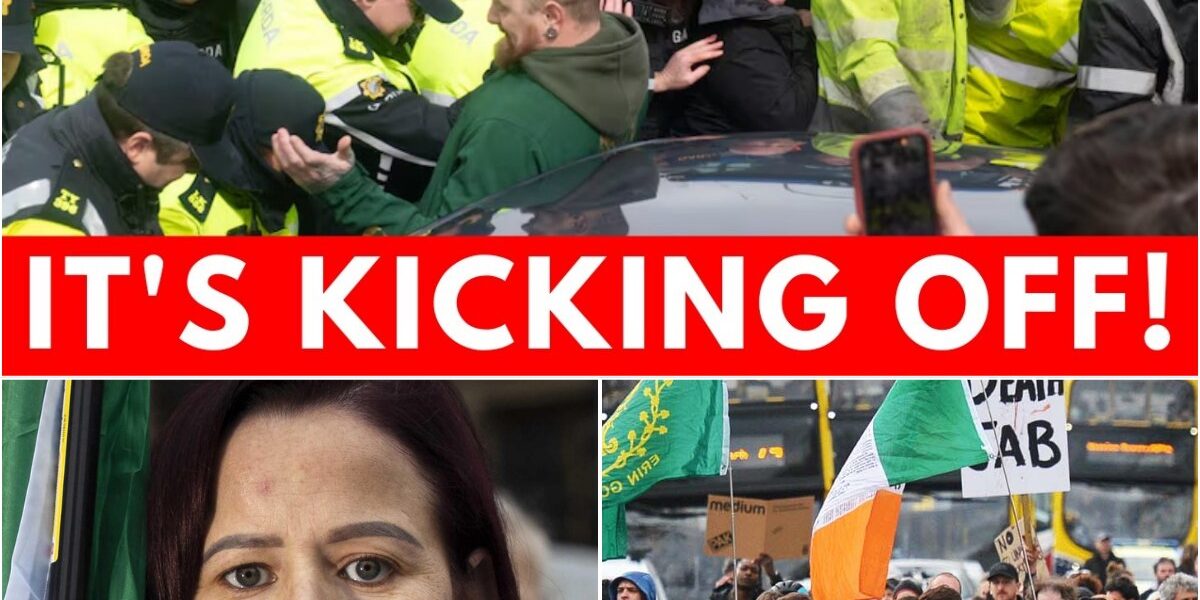
Irish Fuel Protests Escalate as Farmers and Truckers Block Roads Amid Soaring Costs and Government Response. phunhoang

DUBLIN — A wave of protests by farmers, truckers and agricultural contractors has brought significant disruption to Ireland in April 2026, with blockades of major roads, fuel depots and the country’s sole oil refinery triggering fuel shortages and prompting a strong law enforcement response from the authorities.
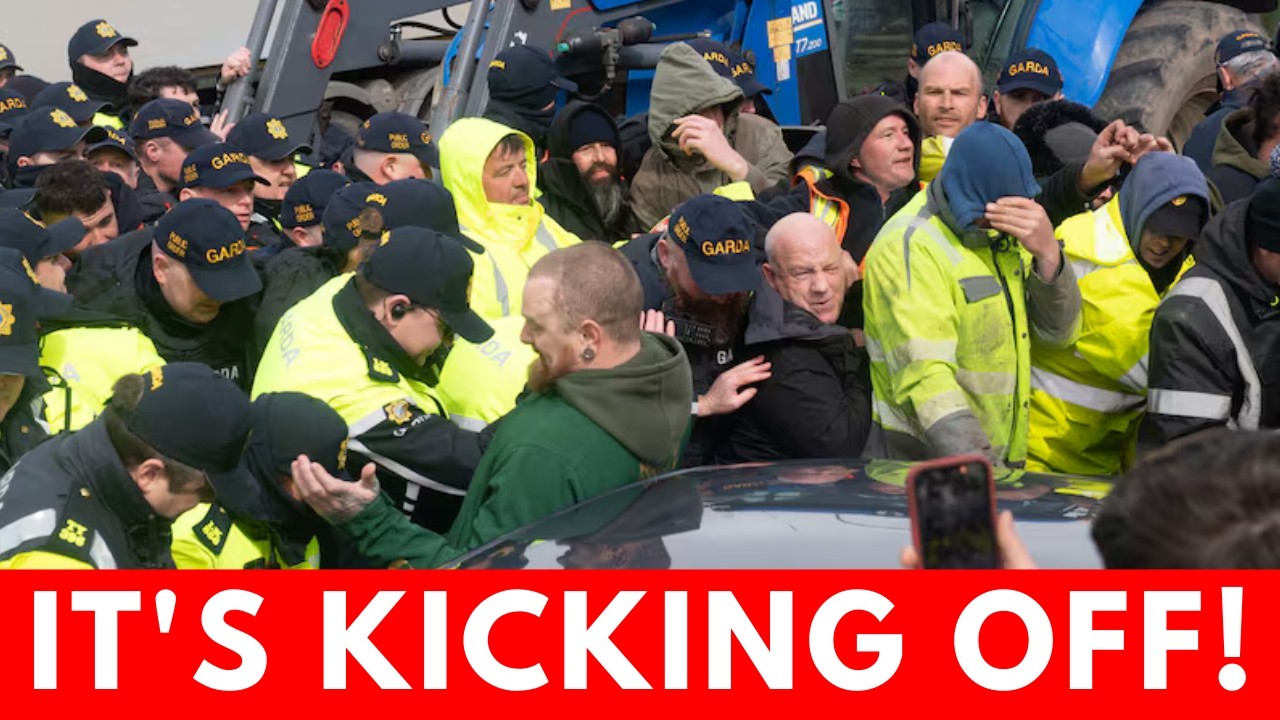
The demonstrations began on 7 April with slow-moving convoys of tractors, lorries and other vehicles clogging motorways including sections of the M50 around Dublin, O’Connell Street in the capital, and routes near Limerick, Portlaoise and Galway. Protesters blocked access to fuel distribution hubs that supply much of the country, leading to reports that more than one-third of Ireland’s approximately 1,500 service stations ran dry at the height of the action.
The immediate trigger was a sharp rise in diesel and petrol prices, exacerbated by the ongoing impact of the 2026 Iran conflict and the effective closure of the Strait of Hormuz, a critical chokepoint for global oil and liquefied natural gas supplies. International oil prices surged in the preceding weeks, compounding the effects of Ireland’s existing excise duties and carbon taxes on fuel, which critics have long argued impose a heavy burden on rural and transport-dependent sectors.
Participants described the protests as a stand by those who “keep the lights on and the people’s bellies full” — farmers, hauliers and small business owners facing rising operational costs that threaten their livelihoods. Many displayed Irish tricolour flags, framing their action as a defence of working people against policies they see as disconnected from everyday realities.
The government’s initial response focused on enforcement. Garda Síochána, supported by public order units, mounted police and, in some cases, the Irish Defence Forces providing recovery vehicles, moved to clear blockades at critical infrastructure sites including the Whitegate refinery in County Cork, ports in Galway and Dublin, and key motorway sections. Footage showed officers using pepper spray in certain confrontations, making arrests, and towing vehicles, actions defended by ministers as necessary to protect supply chains and prevent greater economic damage.
Taoiseach Micheál Martin stated that prolonged blockades of ports and the refinery risked halting exports — which account for a large share of Ireland’s economic output — and disrupting essential services. The government described the situation as a “very dangerous moment” for the country, emphasising the need to restore access to fuel for emergency services, commuters and businesses.
As disruption mounted, with panic buying reported and widespread traffic chaos, the administration shifted towards concessions. On 12-13 April, ministers announced a substantial support package valued at €505 million, including further cuts to excise duties on petrol and diesel until the end of July, a reduction in the carbon tax on green diesel, delayed implementation of planned carbon tax increases, and direct payments to affected sectors such as hauliers, farmers, agricultural contractors, bus operators and fisheries.
This followed an earlier €250 million package introduced in March. The combined measures were presented as among the most significant responses in Europe to the fuel price crisis. Finance Minister Simon Harris and other officials engaged in talks with industry representatives, though initial reluctance to negotiate directly with ad-hoc protest leaders drew criticism.
The protests also had political repercussions. Two lawmakers resigned in protest over the government’s handling, and the coalition faced — and narrowly survived — a vote of no confidence tabled by opposition parties who argued the response was too slow and the support insufficient. Some younger members within the governing parties reportedly questioned the leadership’s approach.
Broader grievances echoed during the demonstrations. Protesters and supporters linked the fuel crisis to longer-standing concerns, including the cumulative impact of green transition policies, pressures on rural economies, and perceived prioritisation of international commitments over domestic needs. References to previous rolling protests over immigration and housing highlighted a sense among some participants that underlying frustrations had been building for years.
The government maintained that its policies balance environmental goals with economic support, pointing to the scale of the latest aid as evidence of responsiveness. Officials rejected claims of disproportionate force, arguing that blockades of essential infrastructure endangered public safety and the wider economy.
Analysts note that the episode reflects wider tensions visible across Europe, where rising energy costs linked to geopolitical events intersect with domestic debates over taxation, agriculture and cost-of-living pressures. In Ireland’s case, the reliance on imported fuel and the structure of its tax system amplified the shock from global price movements.
By mid-April, most blockades had been cleared, and normal fuel distribution began to resume, though some residual disruption lingered. The government has committed to further monitoring and potential additional measures ahead of the October budget.
The events have nonetheless exposed fault lines in Irish society. Supporters of the protesters argue that heavy-handed enforcement risks alienating hard-working citizens and radicalising moderate voices. Critics of the demonstrations counter that illegal blockades cannot be allowed to paralyse the country, and that established industry bodies, rather than spontaneous actions, provide the proper channel for dialogue.
Questions remain about long-term solutions. Calls have grown for a comprehensive review of fuel taxation, investment in domestic energy resilience, and greater consultation with rural and transport sectors on green policies. The speed with which the government moved from enforcement to financial concessions suggests recognition that public patience with rising costs has limits.
As Ireland emerges from the week of upheaval, the episode serves as a case study in the challenges of managing economic shocks in an open, trade-dependent economy while maintaining social cohesion. The tractors may have been towed away, but the underlying pressures — geopolitical volatility, fiscal policy choices and demands for fair treatment of working people — are likely to shape political debate for months to come.
Whether the latest package sufficiently addresses the concerns raised, or merely delays a deeper reckoning, will become clearer in the weeks ahead as fuel prices continue to respond to developments in the Middle East and global markets.







Related Posts
A House Divided: The Prairie Rebellion and the Fraying of the Canadian Map.thuynga
EDMONTON, Alberta — The quiet hum of the Western Canadian prairies has been replaced by a discordant roar of dissent, as a movement once relegated to the…
“THEY WANT HIM GONE”: Labour MPs Launch Brutal Coup to Oust Starmer RIGHT NOW! xamxam
Labour MPs are openly calling for a no confidence vote against Keir Starmer, signaling a potential regime change within the party. With mounting public dissent and alarming polling figures, the question is no longer if Starmer will face a challenge, but when it will happen. The party is poised for upheaval. The political landscape within the Labour Party is shifting dramatically as discontent brews among its members. Reports indicate that a faction of Labour MPs is actively…
The $175 Billion Reversal: Washington Opens the Portal to a Trade War Retreat.thuynga
WASHINGTON — At precisely 8:00 a.m. Eastern time on Tuesday, the United States government opened a digital gateway that represents perhaps the most significant institutional retreat in…
🚨 IRELAND IS EXPLODING — Conor McGregor Goes Rogue! 🇮🇪⚡..ILOVEFB
In his message, McGregor claimed that the current government has completely lost public trust, regardless of political affiliation. He sharply criticized a range of policies he described as total…

“SCANDALE : NAGUI ACCULÉ PAR ALLONCLE, IL ATTAQUE HÂTEMENT SON PÈRE POUR SE SAUVER ?.HANGHANG
Scandale médiatique : Nagui sous pression après les révélations de Charles Alloncle, une polémique qui enflamme le débat public La scène médiatique française est secouée par une…
FBI and ICE Uncover Shocking $1.5 Billion Bribery Scheme in Coral Gables: The Arrest of Sheriff and 21 Officers Exposes a Corrupt Police Force Serving Drug Cartels…ll
Breaking news from Coral Gables, Florida: FBI and ICE agents have raided the opulent mansion of Sheriff Antonio Vargas, exposing a staggering $1.5 billion bribery scheme. The…
LEAVE A RESPONSE