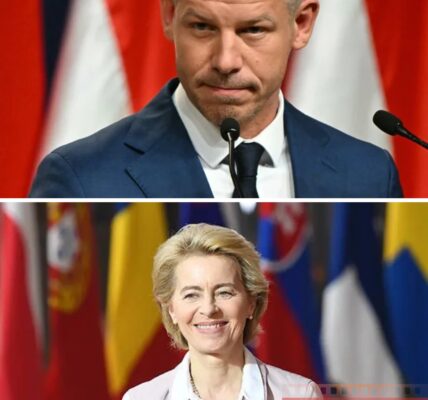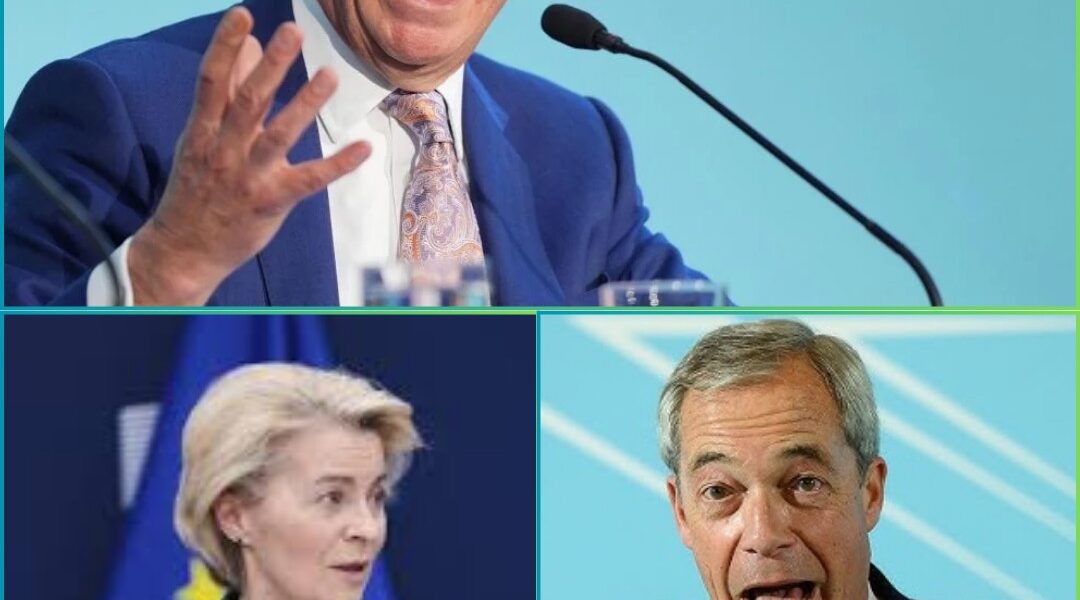
WESTMINSTER ROCKED AS FARAGE TARGETS VON DER LEYEN OVER ALLEGED SECRET UK-EU DEAL AND SOVEREIGNTY FEARS ERUPT ACROSS BRITAIN

A dramatic viral post claims Nigel Farage has demanded the resignation of Ursula von der Leyen after leaked files allegedly exposed a hidden arrangement allowing Brussels to influence British censorship laws. Framed as a national betrayal, the message suggests the United Kingdom has secretly surrendered sovereignty despite leaving the European Union. The language is explosive—but the claims require serious caution.
First, the suggestion that von der Leyen is “dictating UK laws” from behind closed doors is an extraordinary allegation that would require clear documentary evidence. Since Brexit, the UK is no longer subject to EU legislative control in the same direct way member states are. While the UK and EU continue to negotiate standards, trade rules, data arrangements, and security cooperation, that is not the same as Brussels secretly governing Britain.

Second, posts like this often blur the difference between regulatory alignment and loss of sovereignty. Countries regularly adjust domestic rules to maintain trade access, technology compatibility, aviation standards, food exports, financial cooperation, or digital data flows. Those compromises can be politically controversial, but they are common features of international relations rather than proof of foreign rule.
The phrase “censorship laws” is especially vague. It may refer to online safety regulation, hate speech rules, digital platform compliance, data moderation, or cross-border content standards. Viral posts often use the word censorship to describe any regulation they oppose, even when the actual issue is more technical and contested.
Farage has long built political momentum through sovereignty arguments, particularly around Brexit and democratic accountability. A story claiming hidden EU influence would naturally fit themes he has emphasized for years: unelected power, secret negotiations, and Britain being drawn back under external control.
The reference to “leaked files Brussels never wanted you to see” is another classic attention device. Sometimes leaks are real and significant; other times ordinary policy drafts, consultation notes, or partial memos are repackaged as bombshells. Without the actual text, authorship, and context, it is impossible to judge the seriousness of the claim.
The emotional language—“surrender,” “panic,” “nationwide revolt,” “elite scrubbing the directive”—is designed to create urgency and outrage. It encourages readers to feel a crisis is unfolding immediately, often before verifying whether any legal change has even occurred.
That said, there is a real underlying debate in Britain: how independent can the UK remain while still cooperating with major blocs like the EU and the United States? Trade, security, migration, and digital policy often require compromises. Critics call that dependence; supporters call it realism.

Social media thrives on stories where sovereignty is portrayed as secretly stolen. These narratives simplify complex governance questions into heroes, villains, and hidden plots. They spread quickly because they tap into identity and distrust.
Ultimately, this post may reflect genuine political anxieties about post-Brexit Britain, but its dramatic claims should be treated skeptically unless tied to specific verified documents and concrete legal measures. The real issue is not whether Westminster has “exploded,” but how Britain balances independence with unavoidable international cooperation.